.png)


2026 Essential Indonesia Property Leasehold/Freehold Guide

Indonesia continues to attract property investors from around the world, particularly in destinations such as Bali, Lombok, Jakarta, and other emerging tourism regions. Luxury villas, apartments, commercial buildings, resorts, and mixed-use developments continue to create investment opportunities for both domestic and foreign buyers.
However, one of the most misunderstood aspects of investing in Indonesian real estate is Indonesia Property Leasehold/Freehold. Many foreign investors mistakenly believe they can purchase Indonesian property under the same ownership rules that apply in their home countries. In reality, Indonesian land law provides several different land rights, each with its own legal requirements, restrictions, and permitted uses.
Understanding Indonesia Property Leasehold/Freehold is one of the most important steps before signing any reservation agreement, lease contract, or property purchase transaction. Choosing the wrong ownership structure may affect financing options, resale value, licensing, inheritance planning, taxation, and business operations.
This guide explains the four primary property ownership structures available in Indonesia, the legal eligibility for each title, and what foreign investors should consider before making an investment.
Understanding Indonesia Property Leasehold/Freehold
The term Indonesia Property Leasehold/Freehold generally refers to the legal rights that individuals or companies may hold over land and buildings under Indonesian law. Unlike many countries that primarily distinguish between leasehold and freehold ownership, Indonesia recognizes several different land rights regulated under the Basic Agrarian Law (Law No. 5 of 1960) and subsequent implementing regulations.
The four most common ownership structures include:
- Hak Sewa (Leasehold)
- Hak Milik (Freehold)
- Hak Pakai (Right to Use)
- Hak Guna Bangunan (Right to Build or HGB)
Each structure provides different legal rights, ownership durations, transfer mechanisms, and eligibility requirements. Understanding these differences is essential for anyone exploring Indonesia Property Leasehold/Freehold, whether for residential, commercial, or investment purposes.
The Four Main Indonesia Property Leasehold/Freehold Ownership Types
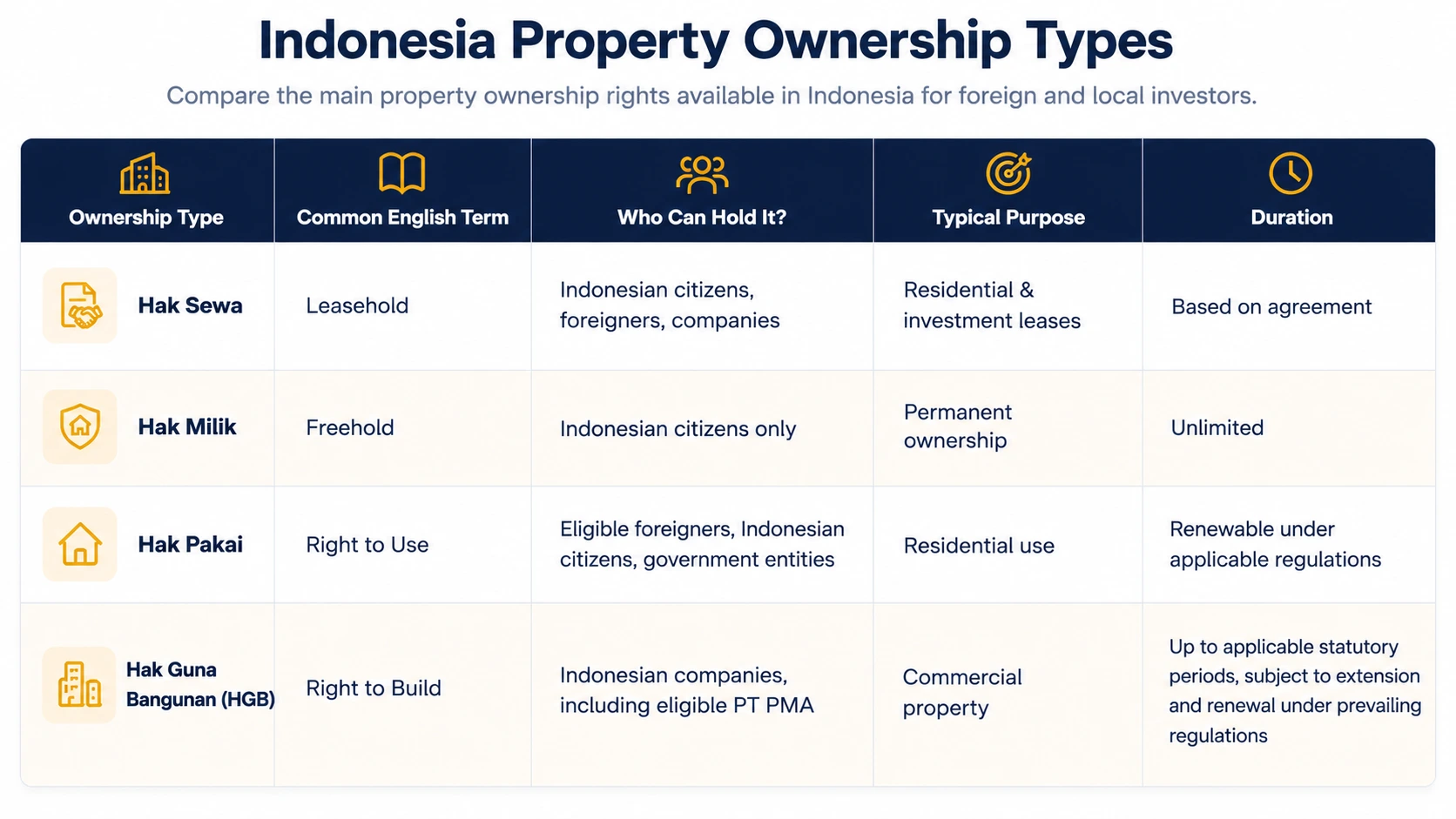
Although these ownership rights are often grouped together under Indonesia Property Leasehold/Freehold, each title serves a different legal function and should be evaluated carefully before any transaction.
Hak Sewa (Leasehold)
Hak Sewa is the most common form of Indonesia Property Leasehold/Freehold used by foreign individuals purchasing villas, houses, or residential investment properties.
Rather than acquiring ownership of the land itself, the lessee receives the contractual right to occupy and use the property for an agreed period under a lease agreement with the landowner.
Typical lease agreements include negotiated terms covering:
- Lease duration
- Extension options
- Rental payments
- Maintenance responsibilities
- Transfer rights (where permitted)
- Construction or renovation provisions
Unlike freehold ownership, Hak Sewa is governed primarily by the contractual agreement between the parties. While Indonesian regulations provide a framework for lease arrangements, the exact duration and commercial terms are negotiated and documented in the lease.
For many foreign investors, Hak Sewa offers a practical way to participate in Indonesia Property Leasehold/Freehold without acquiring ownership rights over the land itself.
Hak Milik (Freehold)
Hak Milik represents the strongest form of ownership within the Indonesia Property Leasehold/Freehold system. It grants full ownership rights over land and generally has no fixed expiration period.
However, Hak Milik is generally reserved for Indonesian citizens. Foreign individuals and foreign-owned companies (PT PMA) cannot directly hold Hak Milik under Indonesian land law.
Hak Milik owners may generally:
- Sell the property
- Transfer ownership
- Inherit the land
- Mortgage the property
- Develop the land in accordance with applicable zoning and licensing regulations
Because of these broad ownership rights, Hak Milik remains the most secure land title available under Indonesian law for eligible holders.
Foreign investors should be cautious of informal or nominee arrangements that claim to provide indirect Hak Milik ownership, as these structures may create significant legal risks and may not be enforceable.
Hak Pakai (Right to Use)
Hak Pakai is another important category within Indonesia Property Leasehold/Freehold and may be available to certain eligible foreign individuals, Indonesian citizens, and specific legal entities, subject to statutory requirements.
Hak Pakai grants the legal right to use land for residential or other approved purposes but does not provide the same ownership rights as Hak Milik.
Compared with Hak Sewa, Hak Pakai is a registered land right recorded by the National Land Agency (BPN). As a result, obtaining Hak Pakai generally involves formal administrative procedures and registration requirements.
Hak Pakai is often considered by foreign individuals who meet the legal criteria and intend to occupy property for residential purposes, rather than purely investment-driven leasing.
Hak Guna Bangunan (HGB)
Hak Guna Bangunan (HGB) plays a vital role in Indonesia Property Leasehold/Freehold, particularly for commercial developments.
HGB allows the holder to construct and own buildings on land for a specified period under Indonesian law. It is widely used for:
- Hotels
- Resorts
- Office buildings
- Shopping centers
- Warehouses
- Industrial facilities
- Commercial apartments
- Mixed-use developments
Eligible Indonesian companies, including qualifying PT PMA structures, may obtain HGB for approved investment activities, subject to applicable investment and land regulations.
For many foreign businesses, HGB is the preferred legal structure because it provides greater long-term certainty for commercial property development while complying with Indonesian investment laws.
Accordingly, investors planning hotels, resorts, restaurants, or other business facilities should carefully assess whether HGB is the most appropriate option within the broader Indonesia Property Leasehold/Freehold framework.
Property Title Eligibility Comparison
The following table summarizes the general eligibility for each property title. Actual eligibility depends on the applicable laws, implementing regulations, and the specific circumstances of the buyer or entity.

Understanding this comparison is one of the most valuable aspects of Indonesia Property Leasehold/Freehold, as the choice of title can significantly affect investment strategy, licensing, financing, and long-term exit planning.
Which Property Ownership Structure Is Right for You?
Choosing the correct ownership structure is one of the most important decisions in the Indonesia Property Leasehold/Freehold process. The best option depends on your nationality, investment objectives, intended property use, and long-term business strategy.
The following comparison summarizes the four most common property rights available in Indonesia.
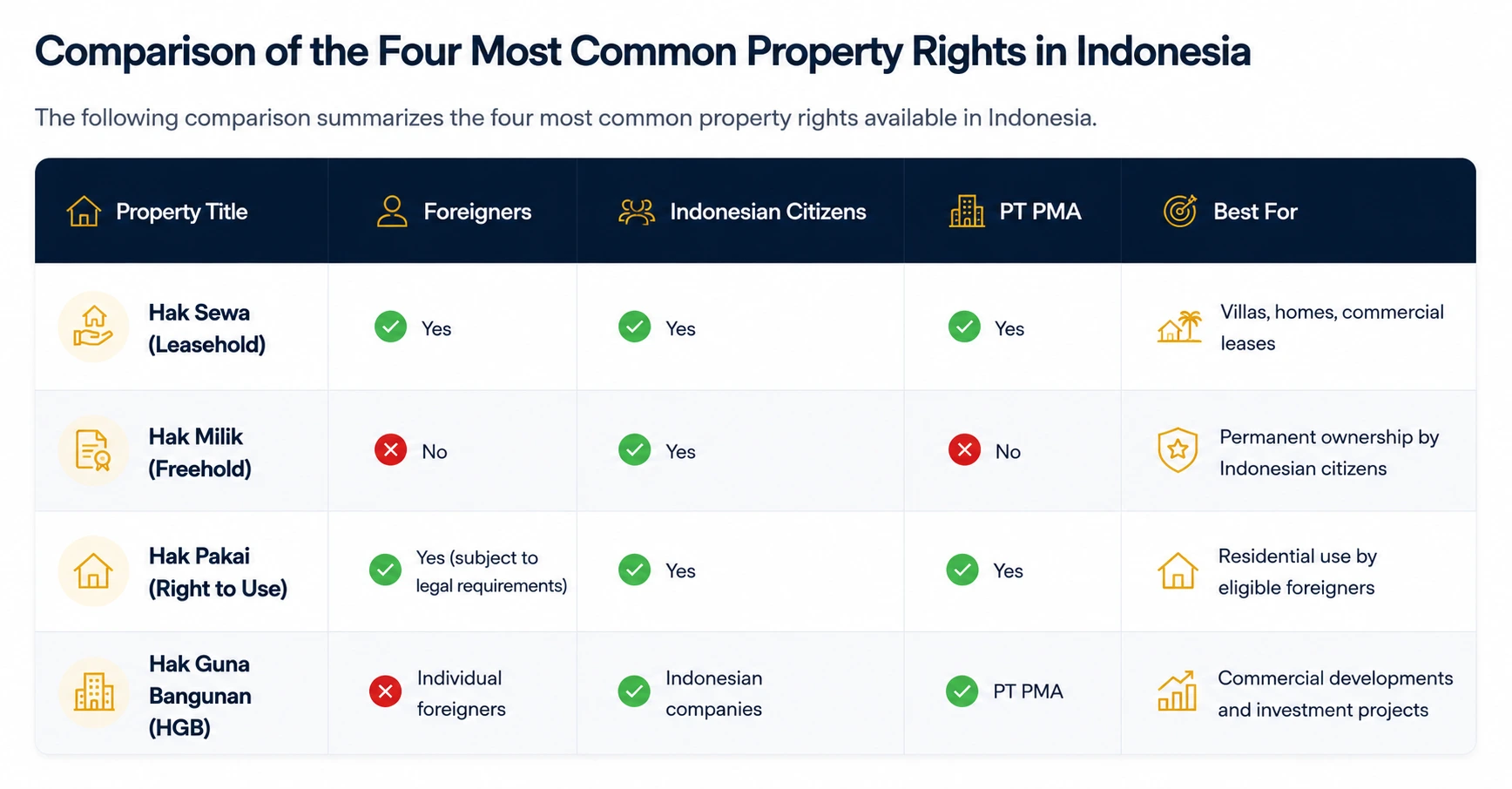
Understanding these differences is fundamental to making informed decisions regarding Indonesia Property Leasehold/Freehold investments. Selecting an inappropriate ownership structure can create unnecessary legal complications, financing challenges, and operational restrictions in the future.
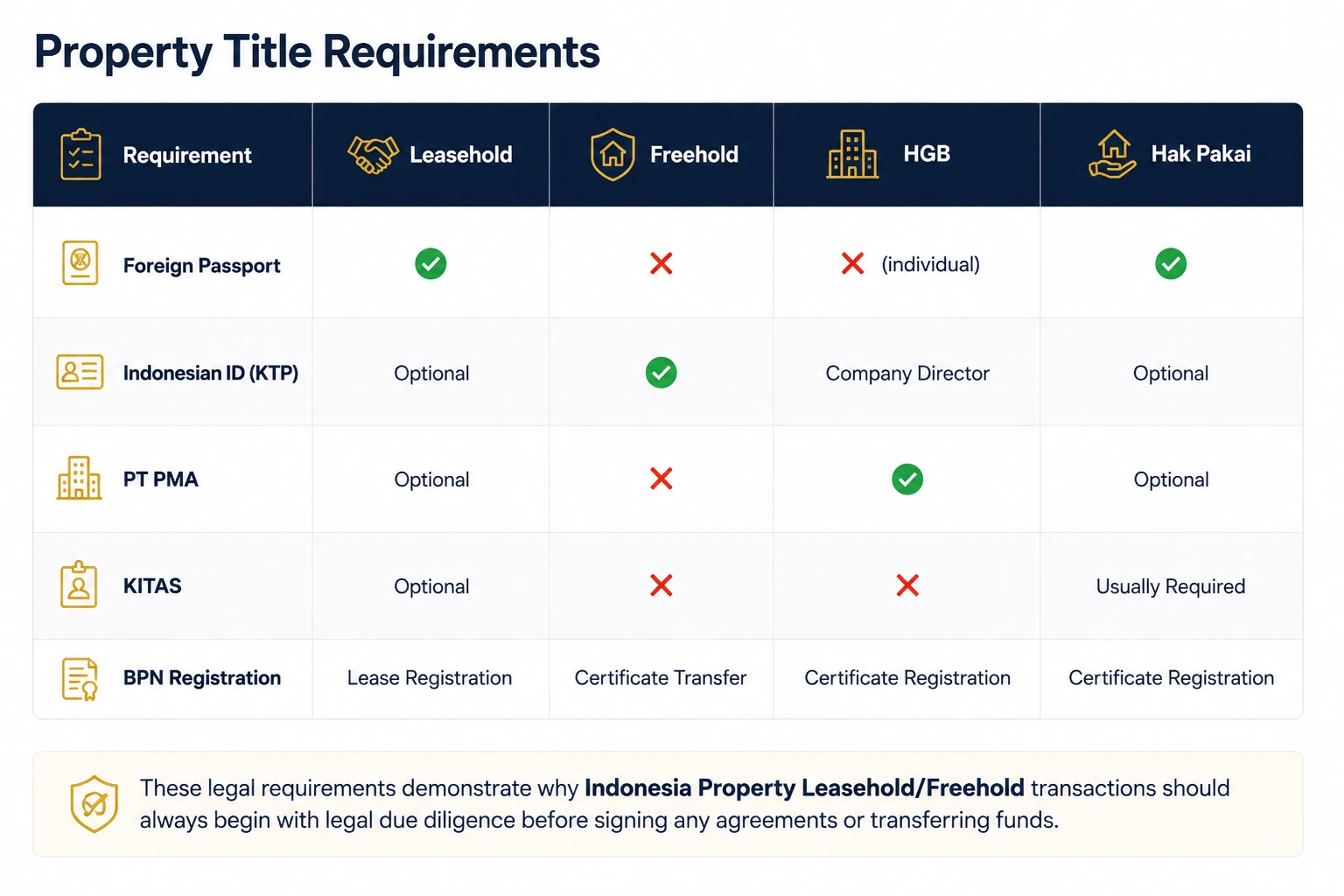
Property Title Requirements
Different ownership structures require different legal qualifications. Investors should understand the eligibility requirements before beginning any acquisition process.
Step-by-Step Buying/Leasing Process

During every stage of Indonesia Property Leasehold/Freehold transactions, buyers should verify:
- Ownership history
- Existing mortgages or encumbrances
- Land zoning
- Building permits
- Sempadan regulations
- Tax obligations
- Identity of the landowner
Legal verification significantly reduces investment risks.
Step-by-Step Leasehold Purchase Process
Leasehold transactions are generally simpler than freehold acquisitions, making them popular among foreign investors. Nevertheless, every stage should still be carefully reviewed.
Step-by-Step Freehold / HGB Acquisition Process
Commercial acquisitions using HGB or Indonesian freehold ownership generally involve additional documentation and government registration.
Compared to leasehold arrangements, Indonesia Property Leasehold/Freehold acquisitions involving ownership certificates require more government administration, making experienced legal assistance highly advisable.
Common Mistakes Foreign Investors Should Avoid
Many investment problems arise not because of bad properties, but because investors misunderstand the legal framework governing Indonesia Property Leasehold/Freehold transactions.
Some of the most common mistakes include:
Assuming Leasehold Equals Ownership
Leasehold provides contractual rights for a specific period but does not transfer ownership of the land certificate.
Ignoring Due Diligence
Some buyers rely solely on agents or verbal assurances without verifying legal documents.
Using Nominee Arrangements
Indonesia has strengthened enforcement against illegal nominee ownership structures. Investors should always use legally recognized ownership mechanisms that comply with current regulations.
Not Checking Zoning and Business Licenses
Owning or leasing land does not automatically allow every business activity. Investors should confirm that zoning, KBLI classification, PBG, and operational licenses align with the intended use.
Overlooking Renewal Terms
A lease agreement should clearly specify:
- Renewal rights
- Extension procedures
- Rental adjustments
- Dispute resolution
- Inheritance provisions
- Early termination clauses
These contractual details are an essential part of Indonesia Property Leasehold/Freehold planning.
Why Legal Due Diligence Matters
Regardless of the ownership structure selected, legal due diligence should always be completed before committing to a purchase or lease.
A comprehensive due diligence review typically covers:
- Land certificate verification
- BPN registration status
- Zoning compatibility (RTRW/RDTR)
- Building permits (PBG)
- SLF status where applicable
- Environmental restrictions
- Sempadan setbacks
- Outstanding taxes
- Existing disputes or litigation
- Encumbrances or mortgages
- Seller identity verification
Professional due diligence helps investors avoid costly surprises and provides greater confidence when entering Indonesia Property Leasehold/Freehold transactions.
Source:
FAQ

Share the blog


Related News


SYNERGY PRO Business & Legal Consulting
Social Media


