.png)


7 Essential Indonesia Flag Facts Explained
The Meaning Behind Indonesia's Red and White Flag
Every country has symbols that represent its identity, history, and national values. In Indonesia, few symbols are as recognizable and emotionally significant as the Indonesia Flag.
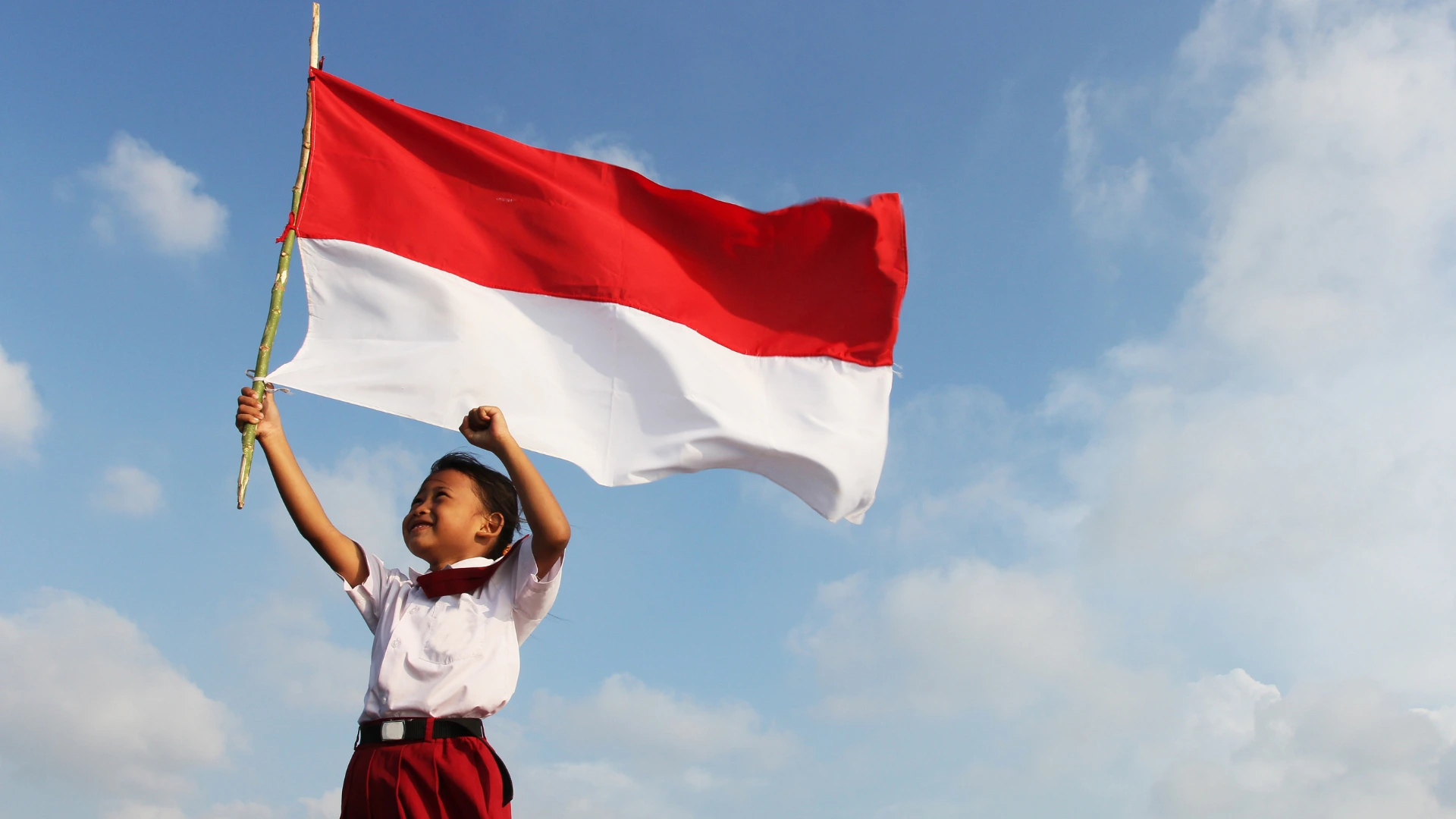
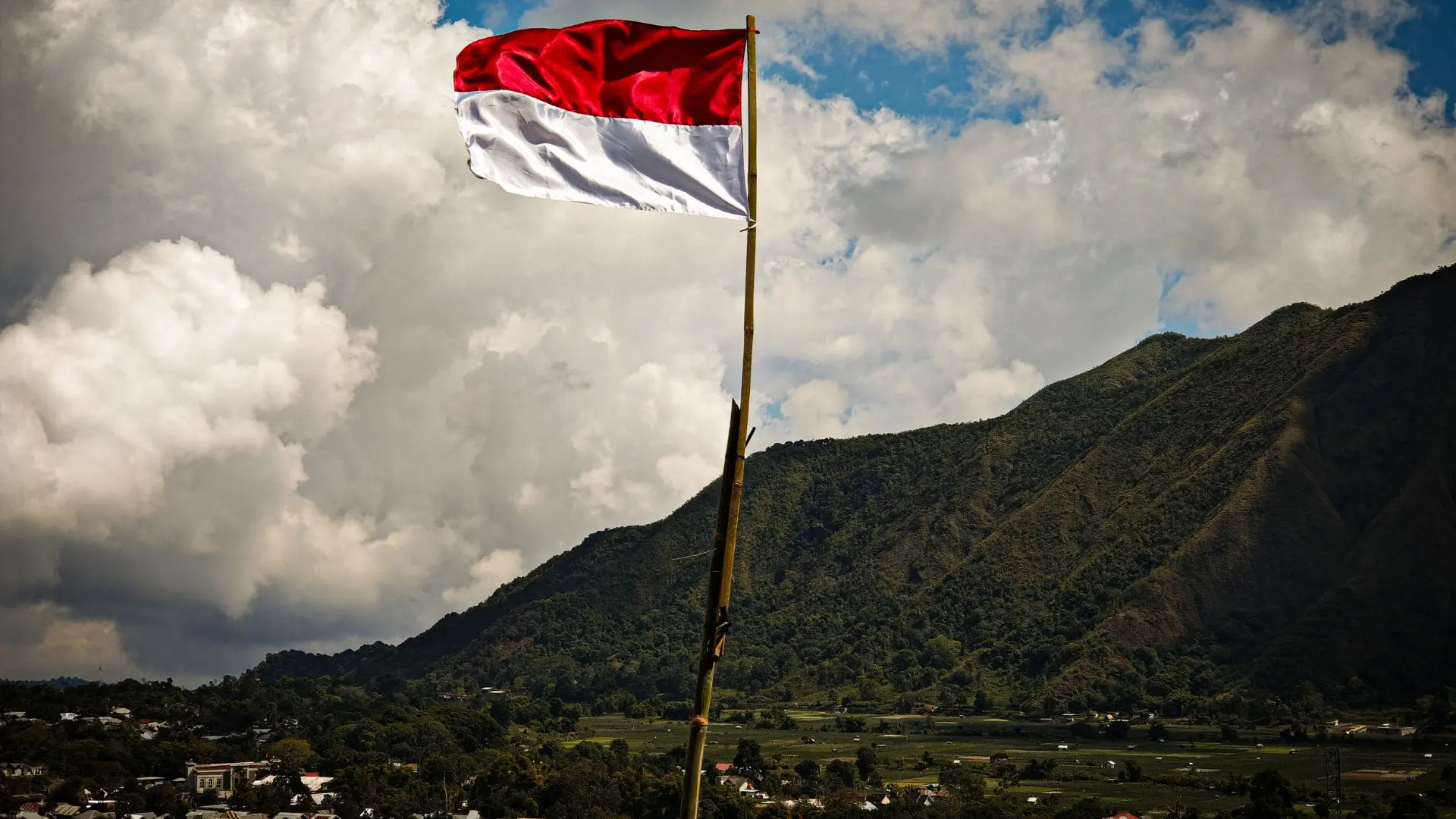
Known as Sang Merah Putih, meaning "the Red and White," the Indonesia Flag consists of two horizontal colors: red on the upper half and white on the lower half.
Although its design is simple, the Indonesia Flag carries a history that extends far beyond Indonesia's declaration of independence in 1945. Its colors have cultural and historical connections that existed long before the modern Republic of Indonesia was established.
Today, the Indonesia Flag can be seen throughout the country, particularly every August when Indonesians celebrate Independence Day.
But what do the colors actually mean, where did the flag come from, and why is it so important to Indonesian identity?
1. What Does the Indonesia Flag Represent?
The Indonesia Flag is more than a national decoration. Under Indonesia's constitutional framework, the national flag is a symbol of the country's sovereignty and national identity.
Law No. 24 of 2009 regulates the national flag, along with the national language, emblem, and anthem. The law describes these national symbols as instruments of unity and expressions of the nation's existence, identity, sovereignty, and dignity.
This is why the Indonesia Flag has a particularly important position in Indonesian society.
For Indonesians, seeing the flag can represent independence, national unity, sacrifice, and pride.
For foreigners living or doing business in Indonesia, understanding the meaning of the Indonesia Flag is also an important way of understanding Indonesian culture.
2. Why Are the Colors Red and White?
The two colors of the Indonesia Flag have widely recognized symbolic meanings.
Red represents bravery, while white represents purity.
According to Indonesia's Directorate of Cultural Heritage Protection, these meanings were adopted when the national red-and-white flag was being developed. The combination became an important expression of Indonesian national identity.
The symbolism can therefore be understood as a combination of two important values:
Red - Bravery and courage
Red represents the courage and determination associated with the struggle for independence.
White - Purity and sincerity
White represents purity, honesty, and sincerity.
Together, these colors express ideals that remain important to Indonesian national identity.
The meaning of the Indonesia Flag is therefore not simply visual. The colors communicate values that have been associated with the country's history and independence movement.
3. The Colors Have Historical Roots
The story of the Indonesia Flag did not begin on August 17, 1945.
Red and white have appeared in various forms throughout Indonesian history and culture. Historical references connect the combination with traditions and symbols from earlier periods, including the era of the Majapahit Kingdom.
The Directorate of Cultural Heritage Protection notes that red and white were used in historical cultural traditions, including the nine-striped red-and-white flag associated with Majapahit.
This historical background gives the Indonesia Flag an additional layer of meaning.
The colors were not simply selected as a modern political design. Their use reflects a much longer cultural history within the Indonesian archipelago.
However, it is important to distinguish historical uses of red and white from the modern national flag established by the Republic of Indonesia.
4. The Flag of Independence
One of the most important moments in the history of the Indonesia Flag occurred on 17 August 1945.
Following the Proclamation of Indonesian Independence, the red-and-white flag was raised during the historic independence ceremony at Pegangsaan Timur 56 in Jakarta.
The flag used during the proclamation was sewn by Fatmawati, the wife of President Sukarno.
According to the Directorate of Cultural Heritage Protection, the original flag was made from red and white cotton fabric and measured approximately 300 centimeters by 200 centimeters when originally produced. It was raised during the proclamation ceremony by Latief Hendraningrat and Suhud.
This historic flag became known as the Bendera Pusaka, or Heritage Flag.
Its significance remains deeply connected to Indonesia's independence.
5. What Happened to the Original Flag?
The original Indonesia Flag used during the 1945 proclamation has a remarkable history.
During the Indonesian Revolution, the flag was moved from Jakarta to Yogyakarta when Indonesian leaders relocated for security reasons.
In 1948, when Yogyakarta was occupied by Dutch forces, the Heritage Flag was entrusted to Husein Mutahar for safekeeping.
To prevent the flag from being discovered and confiscated, Mutahar separated the red and white sections along their original stitching. He transported the two pieces separately before they were eventually reunited.
The Heritage Flag was eventually returned to Jakarta and continued to hold an important ceremonial role.
Due to its fragile condition, it was eventually replaced by a replica for annual Independence Day ceremonies.
The original Indonesia Flag is now preserved as a National Cultural Heritage object. The official cultural heritage database records its national heritage designation under Ministerial Decree No. 003/M/2015.
6. Why Is the Indonesia Flag Everywhere in August?
For many visitors to Indonesia, one of the most noticeable cultural experiences occurs in the weeks leading up to 17 August.
Homes, offices, schools, government buildings, restaurants, hotels, streets, and neighborhoods are commonly decorated with red-and-white flags.
This is connected to the annual celebration of Indonesian Independence Day.
The Indonesia Flag becomes a highly visible symbol of national pride during this period.
In neighborhoods across Bali, Lombok, Java, Sumatra, and other parts of the country, communities organize ceremonies, competitions, decorations, and social activities.
The celebrations can look different from one region to another, but the Indonesia Flag provides a common national symbol connecting these communities.
For foreigners living in Indonesia, August therefore offers a unique opportunity to experience Indonesian culture beyond tourism.
7. The Indonesia Flag and National Law
The use of the Indonesia Flag is not simply a matter of tradition.
Its official use is regulated under Law No. 24 of 2009 concerning the National Flag, Language, Emblem, and Anthem. The law remains in force according to the official database of Indonesia's National Legal Documentation and Information Network.
The legislation establishes rules concerning matters such as the form, size, use, display, and treatment of the national flag.
This means businesses, organizations, institutions, and individuals should treat the Indonesia Flag appropriately when displaying it.
Indonesia's official government portal has also highlighted that violations involving improper treatment or use of the national flag can carry criminal consequences under the applicable provisions.
For businesses operating in Indonesia, particularly foreign-owned businesses, respecting national symbols is therefore both a cultural and legal consideration.
The Indonesia Flag in Modern Indonesia
More than eight decades after independence, the Indonesia Flag continues to play an important role in everyday Indonesian life.
It appears at official ceremonies, schools, government institutions, sporting events, community celebrations, and Independence Day activities.
Its simplicity makes it immediately recogniable, while its history gives it a deeper significance.
The Indonesia Flag represents a country that emerged from a long and complex history to establish itself as an independent nation.
It also represents the diversity of Indonesia.
From Bali and Lombok to Sumbawa, Java, Sumatra, Kalimantan, Sulawesi, and Papua, different communities may have their own cultures, languages, traditions, and identities. Yet the Indonesia Flag remains a shared national symbol.
For foreigners living, working, traveling, or investing in Indonesia, learning about the Indonesia Flag can provide a better understanding of the country's cultural identity.
Why the Indonesia Flag Still Matters Today
The significance of the Indonesia Flag goes beyond its historical connection to independence.
Red and white continue to represent values that Indonesians associate with their national identity: courage, purity, unity, sacrifice, and independence.
Every August, the Indonesia Flag becomes a reminder of the events that shaped modern Indonesia.
But it also represents the country's continuing development.
Indonesia today is a major tourism destination, a growing economic market, and an increasingly important destination for international businesses and investors.
Understanding the country's symbols and traditions can help foreigners engage with Indonesia more respectfully and meaningfully.
The Indonesia Flag is ultimately more than a piece of fabric.
It is a symbol of Indonesia's journey, from its historical roots and independence struggle to the diverse and modern nation it is today.
Celebrate Indonesia, Understand Its Story
The Indonesia Flag is one of the simplest national flags in the world, but behind its red and white colors lies a remarkable story of culture, struggle, independence, and national identity.
Have you ever wondered what the red and white flag means beyond Indonesia's Independence Day celebrations?
Whether you are visiting, living, working, or building a business in Indonesia, understanding the country's culture can help you connect more meaningfully with the local community.
Source:
FAQ

Share the blog


Related News


SYNERGY PRO Business & Legal Consulting
Social Media


