.png)


7 Essential Paklaring in Indonesia Rules

Employee offboarding is more than collecting company assets, calculating final salaries, and processing resignation documents. One important obligation that employers often overlook is issuing a Paklaring in Indonesia. Although many businesses treat it as an administrative formality, the document plays a significant role in protecting both employers and employees after an employment relationship ends.
A properly prepared Paklaring in Indonesia, commonly translated as an Employment Certificate or Certificate of Employment, provides official evidence that an individual has worked for a company. It confirms employment history, job position, and service period, making it an important document when former employees apply for new jobs, immigration purposes, professional licensing, banking requirements, or visa applications.
For employers, issuing a legally compliant Paklaring in Indonesia demonstrates good corporate governance and compliance with Indonesian employment regulations. Failure to issue the certificate when required may create unnecessary disputes and negatively affect a company's reputation as an employer.
This article explains the seven essential rules every employer should understand about Paklaring in Indonesia, including its legal basis, mandatory contents, best practices, and common compliance mistakes under the latest Indonesian employment regulations.
1. What Is Paklaring in Indonesia?
A Paklaring in Indonesia is an official document issued by an employer after an employee's employment has ended. The certificate verifies that the employee worked for the company during a specified period and generally includes factual information regarding the employee's position, employment duration, and primary responsibilities.
Unlike a recommendation letter, a Paklaring in Indonesia should remain objective. Its primary purpose is to confirm employment history rather than evaluate an employee's personality or performance. While employers may voluntarily include positive remarks, the document should focus on verifiable employment information.
A professionally prepared Paklaring in Indonesia is usually printed on company letterhead, signed by an authorized representative such as the HR Manager or Company Director, and dated accordingly. Although company stamps are no longer legally mandatory in many cases, some organizations continue to use them to strengthen document authenticity.
For multinational companies operating in Indonesia, issuing a bilingual Paklaring in Indonesia in both Bahasa Indonesia and English is considered a good practice, especially when former employees may use the certificate abroad.
2. Legal Basis for Paklaring in Indonesia
Employers often assume that providing a Paklaring in Indonesia is optional. However, Indonesian employment regulations establish employer obligations following the termination of an employment relationship.
The primary legal references include:
- Law No. 6 of 2023 concerning the Job Creation Law framework.
- Government Regulation (PP) No. 35 of 2021, which regulates employment agreements, outsourcing, working hours, termination of employment, and employer obligations. The regulation requires employers to provide a certificate containing at least information regarding the employee's position or work performed after employment ends.
Although the regulations do not prescribe a single standardized format, employers are expected to issue an employment certificate containing accurate and sufficient employment information.
Therefore, preparing a proper Paklaring in Indonesia should form part of every company's employee offboarding procedure.
3. Essential Information Every Paklaring in Indonesia Should Include
A professionally prepared Paklaring in Indonesia should contain clear, factual, and verifiable information.
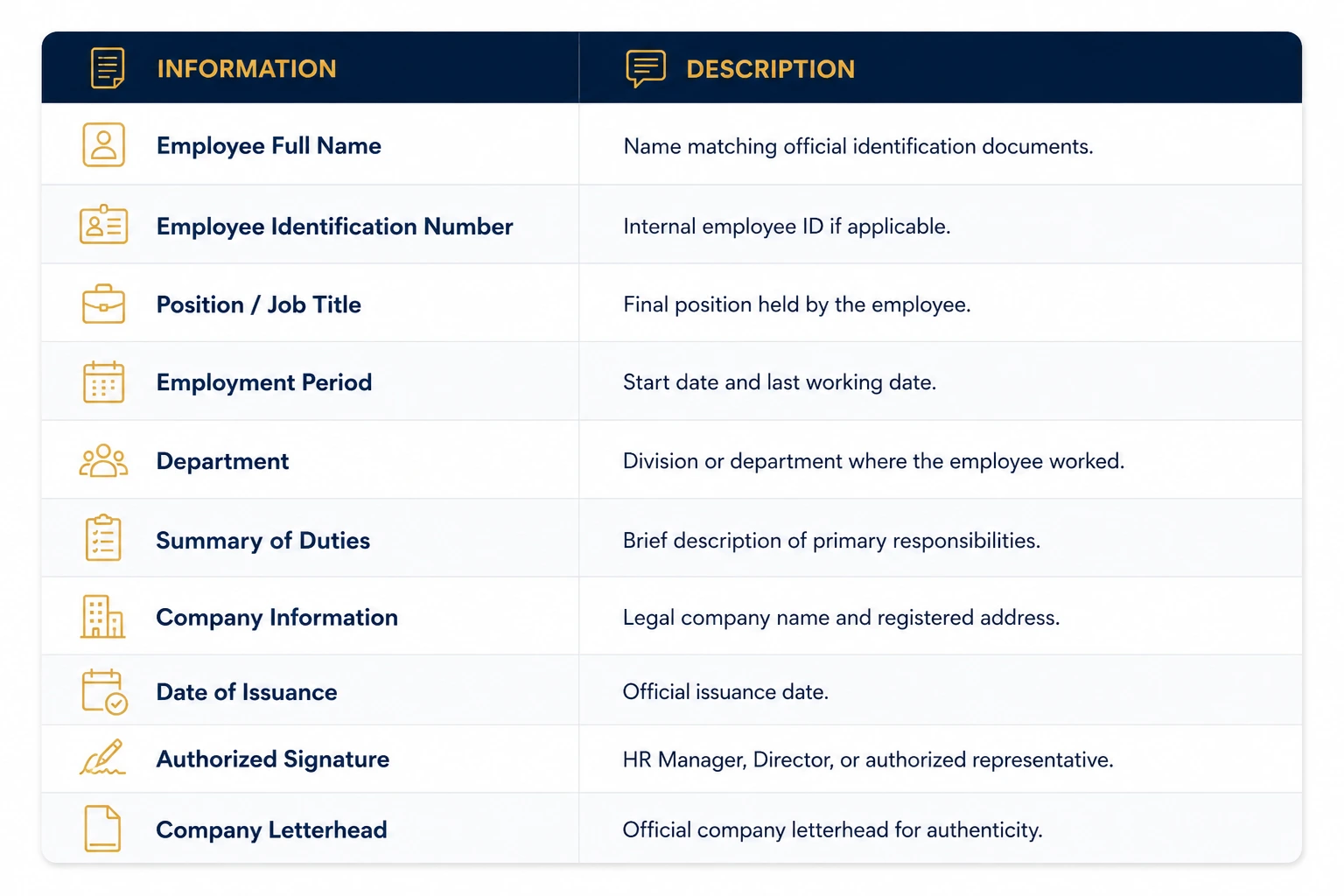
Each section included in a Paklaring in Indonesia serves a specific purpose.
The employee's name and identification ensure that the certificate corresponds to the correct individual. The employment period verifies work experience, while the job title confirms the employee's professional role.
Including a brief description of duties allows future employers to understand the employee's previous responsibilities without turning the document into a recommendation letter.
Meanwhile, the company's legal information, authorized signature, and issuance date strengthen the credibility of the Paklaring in Indonesia and make verification easier when requested by government agencies, financial institutions, or prospective employers.
Most importantly, employers should ensure that every statement contained in the Paklaring in Indonesia accurately reflects company records to avoid inconsistencies that could create future legal or administrative issues.
4. Issue the Paklaring Promptly After Employment Ends
One of the most important principles of Paklaring in Indonesia is timeliness. Employers should issue the certificate as soon as reasonably possible after an employee's resignation, retirement, contract completion, or termination has been finalized.
Delaying the issuance of a Paklaring in Indonesia may create unnecessary difficulties for former employees, especially when they need the document for:
- New job applications
- Visa or immigration processes
- Bank loan applications
- Professional certifications
- Employment verification
Many companies choose to provide the Paklaring in Indonesia together with the employee's final payroll documents and other exit paperwork. This approach helps ensure a smooth and well-organized offboarding process.
5. Ensure the Information Is Accurate and Objective
Because a Paklaring in Indonesia is an official company document, every detail should be factual, accurate, and supported by company records.
HR departments should verify:
- Employee's full legal name
- Employment start and end dates
- Final job title
- Department
- Primary responsibilities
- Company information
Avoid including subjective opinions, disciplinary history, or confidential internal matters unless specifically required by law or agreed upon by the parties.
A well-prepared Paklaring in Indonesia serves as a factual employment record rather than a performance appraisal. Keeping the document objective protects both the employer and the former employee from potential misunderstandings.
6. Follow a Standardized HR Process
To maintain consistency across the organization, companies should establish a standard operating procedure (SOP) for issuing a Paklaring in Indonesia.
A typical HR workflow may look like this:
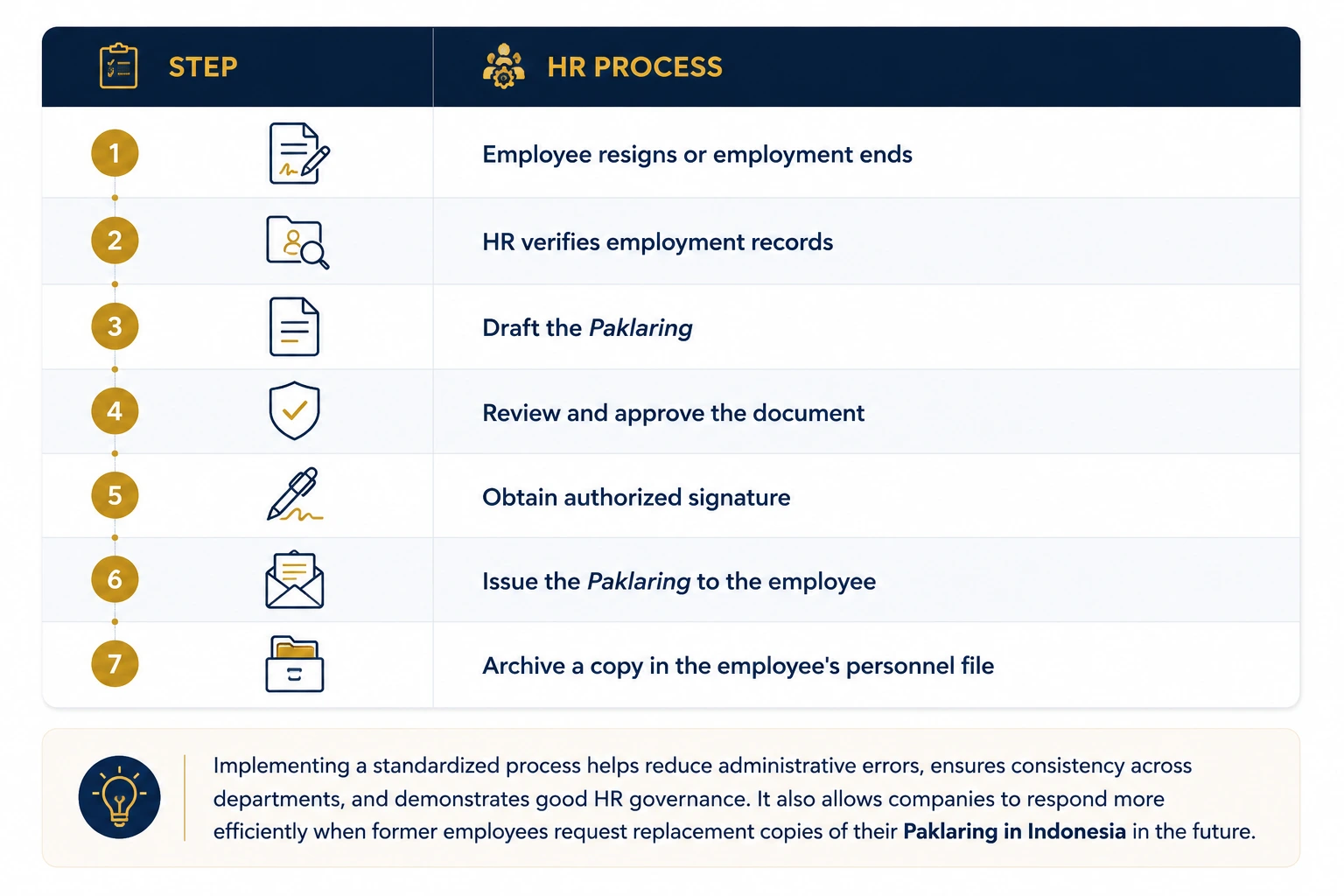
Implementing a standardized process helps reduce administrative errors, ensures consistency across departments, and demonstrates good HR governance. It also allows companies to respond more efficiently when former employees request replacement copies of their Paklaring in Indonesia in the future.
7. Maintain Proper Employment Records
Preparing a compliant Paklaring in Indonesia becomes much easier when employment records are properly maintained throughout the employee's service period.
Employers should keep organized records such as:
- Employment agreements
- Contract amendments
- Promotion letters
- Payroll records
- Attendance records
- Performance evaluations
- Resignation letters or termination documents
- Employee identification information
Accurate record-keeping supports the preparation of a reliable Paklaring in Indonesia and reduces the likelihood of discrepancies that could lead to disputes or verification issues.
Common Mistakes Employers Should Avoid
Even experienced HR teams occasionally make mistakes when preparing a Paklaring in Indonesia. Avoiding these common errors can improve compliance and reduce administrative risks.
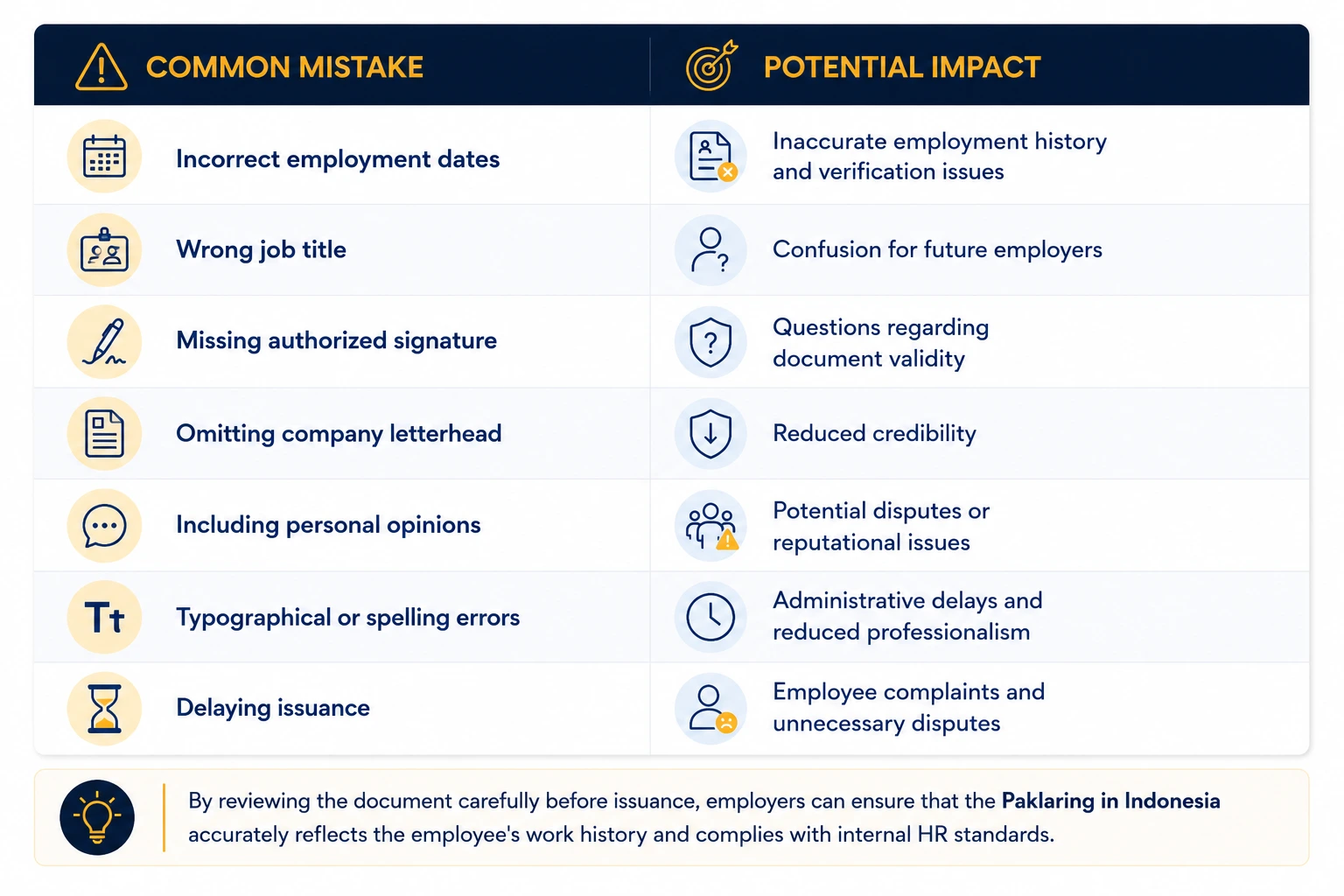
By reviewing the document carefully before issuance, employers can ensure that the Paklaring in Indonesia accurately reflects the employee's work history and complies with internal HR standards.
Source:
FAQ

Share the blog


Related News


SYNERGY PRO Business & Legal Consulting
Social Media


