.png)


Bali Named the World’s Best Travel Destination 2026 By Trip Advisor, Market Maturity for Foreign-Owned Businesses
Bali’s Global Recognition and What It Signals for Business in 2026
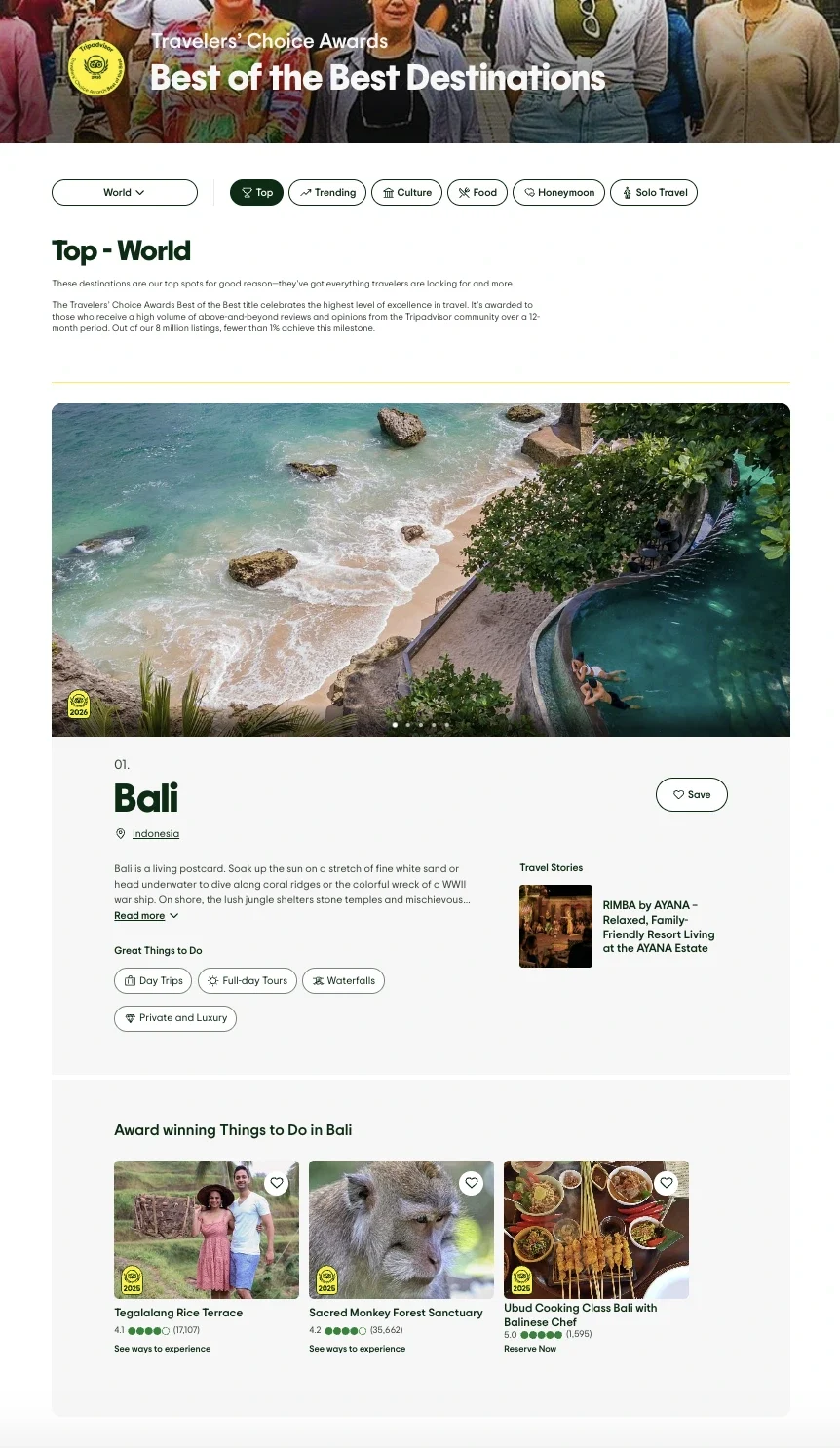
Bali has officially been named the World’s Best Travel Destination 2026 by TripAdvisor’s Travelers’ Choice Awards, a distinction based on millions of verified traveler reviews from across the globe. More than a reflection of scenic beaches or luxury resorts, this recognition highlights Bali’s cultural depth, hospitality standards, and its ability to deliver diverse experiences that resonate with international visitors. For a destination that has navigated global disruption over the past few years, the award underscores a strong and credible recovery.
This achievement should not be read merely as a tourism headline. It is a clear signal that Bali has re-established itself as a trusted, competitive, and highly visible destination within the global travel ecosystem. With renewed attention comes increased visitor expectations, stronger competition among operators, and greater scrutiny from regulators and stakeholders alike. Tourism momentum following such recognition typically translates into sustained demand, longer stays, and broader spending across accommodation, food and beverage, wellness, retail, and lifestyle sectors.
For investors and operators, the implications go beyond visitor numbers. Being recognised again as a top global destination elevates Bali’s international profile at a time when many foreign-owned businesses are reassessing expansion strategies in Asia. This article explores how the World’s Best Travel Destination 2026 status intersects with Bali’s growing market maturity, regulatory landscape, and operational realities, particularly for foreign investors seeking long-term, compliant, and resilient business positions in one of Southeast Asia’s most established tourism markets.
Behind the Title: What Bali’s Global Top Ranking Really Represents
Being named the World’s Best Travel Destination 2026 is not the result of a marketing campaign or a panel of judges, it is driven by real traveler behavior. TripAdvisor’s Travelers’ Choice Awards are calculated using millions of reviews and ratings submitted by verified users over a 12-month period. This methodology captures genuine visitor sentiment across accommodations, attractions, restaurants, and overall experiences, making the recognition a reflection of lived travel realities rather than aspirational branding.
Only a very small fraction of destinations worldwide earn the “Best of the Best” distinction. Fewer than one percent of all locations listed on TripAdvisor reach this tier, placing Bali in an exceptionally competitive global bracket. In the 2026 rankings, Bali surpassed established urban and lifestyle destinations such as London, Dubai, Paris, and Rome, cities with deep tourism infrastructure, global branding power, and long-standing visitor flows. This comparison underscores Bali’s ability to compete not only as a leisure island, but as a mature, multi-dimensional destination on the world stage.
Beyond its top overall placement, Bali also performed strongly across multiple sub-categories. Recognition as a leading honeymoon destination, along with high rankings for cultural travel, wellness experiences, and solo tourism, demonstrates broad-based appeal across diverse visitor segments. This diversity is strategically important: it signals resilience against demand shocks and reduces over-reliance on a single tourism profile.
Viewed holistically, the World’s Best Travel Destination 2026 title validates years of coordinated tourism strategy, including destination management, sustainability initiatives, and cultural preservation efforts led by both government and local communities. For businesses and investors, the award reinforces that Bali is not just popular, it is institutionally prepared to sustain that popularity within an increasingly regulated and competitive global tourism environment. This is precisely why the World’s Best Travel Destination 2026 status carries long-term commercial significance beyond headline appeal.
Tourism Acceleration and the Economic Multiplier Effect of a Global Title
The designation of Bali as the World’s Best Travel Destination 2026 is expected to amplify existing tourism momentum rather than create a short-lived spike. Historically, destinations receiving top-tier global recognition experience measurable increases in visitor arrivals, longer average stays, and higher per-capita spending. Bali was already on a strong recovery trajectory following infrastructure upgrades, expanded international routes, and the normalization of global travel flows. This award reinforces confidence among travelers who may have previously delayed or reconsidered long-haul destinations.
From a market behavior perspective, global recognition tends to smooth seasonal volatility. The World’s Best Travel Destination 2026 status strengthens Bali’s visibility beyond peak holiday periods, encouraging bookings during shoulder seasons when occupancy and average daily rates are traditionally under pressure. For hospitality operators, restaurants, and experience-based businesses, this translates into more predictable year-round demand rather than reliance on short high seasons. Airlines, tour operators, and accommodation platforms typically respond by maintaining or expanding capacity, further reinforcing visitor accessibility.
The economic ripple effects extend well beyond hotels and beaches. Increased foot traffic directly benefits transportation services, retail outlets, wellness providers, and cultural tourism operators, including museums, performance venues, and community-based attractions. As visitor profiles diversify, demand shifts toward curated experiences, health and wellness offerings, gastronomy, and local craftsmanship. This broader spending distribution strengthens local supply chains and creates more resilient tourism-linked ecosystems.
More importantly, this recognition accelerates Bali’s transition from a predominantly leisure-focused destination into a multi-layered tourism economy. The World’s Best Travel Destination 2026 label attracts not only holidaymakers but also long-stay visitors, digital professionals, and investors evaluating lifestyle-integrated business opportunities. For foreign-owned enterprises, this evolution signals a market that is expanding in complexity, sophistication, and regulatory expectation, where growth opportunities are real, but strategic planning and compliance readiness are increasingly decisive.
From Tourism Success to Market Maturity: Bali’s Evolving Business Landscape
Bali’s sustained tourism success has gradually transformed the island into a mature, globally connected market rather than a purely seasonal destination. Infrastructure upgrades, improved international flight connectivity, and the professionalization of tourism-linked services have aligned Bali more closely with established global destinations. The recognition as the World’s Best Travel Destination 2026 reinforces this trajectory, signaling that Bali is no longer competing only on natural beauty, but on reliability, experience quality, and long-term market depth.
From an investor perspective, the World’s Best Travel Destination 2026 award acts as a confidence catalyst. Global visibility reduces perception risk and encourages foreign entrepreneurs to look beyond short-term hospitality plays toward scalable, long-horizon ventures. This includes branded accommodation, lifestyle and wellness businesses, education-linked services, co-working concepts, and integrated F&B operations designed to serve both tourists and resident communities. International partnerships are also more likely to emerge in markets that demonstrate consistency, governance maturity, and sustained demand.
When compared with other world-class tourism hubs such as Barcelona, Phuket, or Dubai, Bali increasingly shares similar business characteristics. These include heightened regulatory oversight, stricter compliance expectations, and rising standards for service delivery. Competition for skilled labor, premium locations, and operational licenses is intensifying, requiring investors to approach market entry with professional structures rather than informal arrangements. The World’s Best Travel Destination 2026 status therefore raises the bar: success depends not only on demand, but on operational discipline and regulatory alignment.
This evolution reflects Bali’s broader transition from a holiday-centric economy into a year-round, diversified business environment. Tourism remains the backbone, but it now supports a wider ecosystem of professional services, creative industries, and lifestyle-driven enterprises. For foreign investors, understanding this shift is critical. The island’s maturity rewards those who plan for longevity, compliance, and integration into Bali’s evolving economic fabric, rather than those seeking quick, seasonal gains.
Industries Poised for Growth as Bali Enters a Global Prime League
Bali’s recognition as the World’s Best Travel Destination 2026 is not only a tourism milestone, but also a clear signal of where business momentum is heading. As international visibility rises, several sectors are positioned to capture both immediate demand and long-term structural growth driven by higher visitor expectations and more sophisticated consumption patterns.
Hospitality and accommodation remain at the forefront. Hotels, resorts, villas, and serviced apartments are experiencing renewed interest, not only from leisure travelers but also from long-stay guests and digital professionals. The World’s Best Travel Destination 2026 status reinforces Bali’s credibility for international hotel brands and professional operators, accelerating brand entry, asset repositioning, and mixed-use hospitality concepts that blend accommodation with lifestyle services.
Food and beverage, retail, and lifestyle businesses are also key beneficiaries. Increased visitor volumes and longer average stays support restaurant groups, specialty cafés, curated retail concepts, and locally inspired boutique brands. As Bali’s global profile rises, consumer expectations shift toward consistency, traceability, and experience-driven offerings. This encourages cross-border partnerships, franchise models, and collaborations between international brands and local producers, particularly in design, crafts, and premium F&B concepts.
Wellness, culture, and events represent another high-growth pillar. Yoga retreats, holistic wellness centers, art spaces, cultural tours, and international festivals benefit from Bali’s image as a destination that combines spirituality, creativity, and community. The World’s Best Travel Destination 2026 title strengthens Bali’s positioning as a place not just to visit, but to transform, attracting curated events and purpose-driven tourism that extends beyond peak seasons.
Education, co-living, and remote work hubs complete this ecosystem. Co-working spaces, learning centers, and long-stay accommodation models are increasingly relevant as Bali attracts professionals seeking flexible, location-independent lifestyles. On the supply side, rising demand encourages more formalized operations, international-standard management, and scalable service models. Together, these sectors illustrate how Bali’s global recognition translates into diversified, opportunity-rich business landscapes rather than isolated tourism plays.
Navigating Legal Reality Behind Bali’s Global Spotlight
As Bali gains renewed global attention as the World’s Best Travel Destination 2026, optimism among foreign investors is understandably high. However, legal and regulatory clarity remains a decisive factor in determining whether that optimism translates into sustainable business success. A mature tourism market brings not only opportunity, but also heightened regulatory expectations and stricter enforcement.
At the entry point, foreign investors must navigate Indonesia’s investment licensing system through OSS 2.0 (Online Single Submission). While designed to streamline processes, OSS still requires accurate alignment between business activities (KBLI codes), capital structure, and operational plans. Common pitfalls include selecting incorrect business classifications, underestimating capital requirements for tourism-related sectors, or failing to update licenses when business models evolve. These errors can delay operations or trigger compliance reviews.
From a structural standpoint, most foreign-owned commercial activities in Bali must be conducted through a PT PMA (foreign investment company). This entity is not merely a formality; it determines licensing eligibility, employment rights, tax exposure, and the ability to contract with third parties. As Bali’s profile rises under the World’s Best Travel Destination 2026 banner, regulators are paying closer attention to whether foreign businesses are properly structured and licensed for the activities they actually perform.
Land ownership and usage rules also demand careful planning. Foreign investors cannot hold freehold (Hak Milik) title directly, making alternatives such as Hak Guna Bangunan (HGB) or long-term lease structures essential. Each option carries different legal, tax, and renewal implications, particularly for hospitality and lifestyle assets that require long operational horizons.
Beyond national laws, provincial and sector-specific regulations play a growing role. Tourism service standards, operational permits, environmental approvals, and local zoning rules are increasingly enforced to protect Bali’s sustainability and reputation. In a destination celebrated as the World’s Best Travel Destination 2026, compliance is no longer just a legal obligation, it is part of maintaining market credibility and long-term viability for foreign-owned businesses.
Operational Compliance Realities Behind Bali’s World-Class Tourism Status
As Bali’s recognition as the World’s Best Travel Destination 2026 drives higher visitor volumes and business activity, employer and operational compliance has become a critical pressure point for foreign-owned companies. Growth in tourism does not only increase revenue potential, it also multiplies regulatory exposure, especially in labor-intensive sectors such as hospitality, F&B, wellness, and lifestyle services.
One of the most frequently overlooked areas is BPJS compliance. Indonesian law requires all employers to register employees with BPJS Ketenagakerjaan (employment social security) and BPJS Kesehatan (national health insurance). This obligation applies to local staff and, in many cases, expatriates working in Indonesia. Late registration, underreported wages, or missed monthly contributions can result in administrative sanctions, restrictions on public services, and reputational damage, risks that escalate as workforce size grows in response to tourism demand.
Closely linked is labor reporting and HR compliance. Employers must ensure accurate employment contracts, correct workforce classification, and timely submission of Wajib Lapor Ketenagakerjaan (mandatory manpower reporting). In practice, discrepancies between HR records, OSS data, and actual operations are a common trigger for inspections. In a destination operating under the global spotlight of the World’s Best Travel Destination 2026, authorities are increasingly attentive to workforce governance standards.
Immigration and work permit compliance is another sensitive area. Foreign executives, managers, or specialists must hold KITAS or KITAP permits that align precisely with their job titles and activities. Misalignment, such as executives acting beyond their approved roles can lead to fines, permit revocation, or business disruption, particularly in high-visibility tourism businesses.
Tax compliance further compounds operational complexity. Employers must manage VAT obligations (where applicable), withholding taxes (PPh 21 and 23), corporate income tax, and land and building tax (PBB). As visitor numbers rise, so do transaction volumes, payroll complexity, and audit exposure. Errors that might have gone unnoticed in a quieter market can quickly surface under increased scrutiny.
Ultimately, the tourism uplift associated with being the World’s Best Travel Destination 2026 amplifies both opportunity and responsibility. Businesses that treat employer and operational compliance as a core management function, not an administrative afterthought are far better positioned to scale sustainably, protect their reputation, and operate confidently in Bali’s increasingly mature tourism economy.
Managing Growth Pressures in a Globally Celebrated Destination
While Bali’s recognition as the World’s Best Travel Destination 2026 reinforces its global appeal, rapid growth inevitably brings structural risks that investors and operators must manage carefully. Success on this scale does not eliminate challenges, it reshapes them, often making regulatory, environmental, and social considerations more complex and visible.
One of the most pressing concerns is overtourism and sustainability. Rising visitor numbers place strain on natural resources, waste management systems, and sensitive coastal and cultural sites. In response, policymakers are increasingly focused on balancing tourism volume with environmental capacity. Sustainability is no longer a branding concept but a regulatory expectation, influencing permit approvals, environmental assessments, and operational standards for tourism-related businesses.
Infrastructure pressure is another reality of accelerated growth. Increased demand affects transportation networks, water and electricity supply, and urban planning—particularly in high-traffic areas. For investors, this means factoring infrastructure readiness into site selection, development timelines, and long-term operational costs. Projects that fail to align with local infrastructure plans often face delays or additional compliance requirements.
Alongside these pressures comes regulatory tightening. As Bali operates under heightened international attention following its status as the World’s Best Travel Destination 2026, authorities are intensifying inspections and enforcing service quality, licensing, and safety standards more consistently. This affects hospitality operators, F&B businesses, and lifestyle ventures alike, particularly those that scaled rapidly without reinforcing internal compliance frameworks.
Equally important are social and cultural impacts. Community relations have become a decisive factor in permit scrutiny and project sustainability. National and provincial policies increasingly emphasize the preservation of Balinese cultural heritage, sacred spaces, and traditional land use. Businesses that overlook local norms or community engagement risk objections, delays, or reputational damage.
In essence, global recognition brings local accountability. Operating successfully in Bali’s current growth phase requires more than capturing demand, it demands proactive risk management, cultural sensitivity, and alignment with evolving regulatory and sustainability priorities that accompany world-class destination status.
Positioning Foreign-Owned Businesses for Long-Term Advantage
For foreign-owned businesses, Bali’s evolution following its recognition as the World’s Best Travel Destination 2026 offers both momentum and responsibility. The key strategic takeaway is that success in this market is no longer driven by opportunity alone, but by how well growth is structured, governed, and sustained.
First, structural compliance must sit at the core of investment planning, not as an afterthought. Licensing, zoning alignment, employment compliance, tax reporting, and immigration status are now closely scrutinized as Bali operates under heightened global attention. Businesses that integrate legal and regulatory planning from the outset are better positioned to scale without disruption.
Second, the global recognition creates room to leverage momentum for partnerships and branding. International operators, institutional investors, and regional partners are increasingly drawn to Bali’s mature tourism ecosystem. Foreign-owned businesses that demonstrate compliance readiness and operational professionalism are more likely to attract strategic collaborations and long-term capital.
Third, sustainable business models are no longer optional. Alignment with cultural preservation, environmental safeguards, and community engagement has become a commercial necessity. Projects that respect local values and service standards tend to move more smoothly through permitting and gain stronger local acceptance.
Finally, internal alignment across HR, tax, and operations is critical. Growing visitor volumes translate into larger workforces, more complex payroll and BPJS obligations, and heightened tax exposure. Businesses that maintain up-to-date compliance frameworks across departments are better equipped to protect margins, reputation, and continuity.
In short, Bali rewards investors who treat compliance, sustainability, and governance as strategic assets not constraints, within an increasingly competitive and visible global destination.
Source:
FAQ

Share the blog


Related News


SYNERGY PRO Business & Legal Consulting
Social Media


