.png)


Costly Bali Property Due Diligence Mistakes: Lessons From an Australian Investor's IDR 6.2 Million Loss
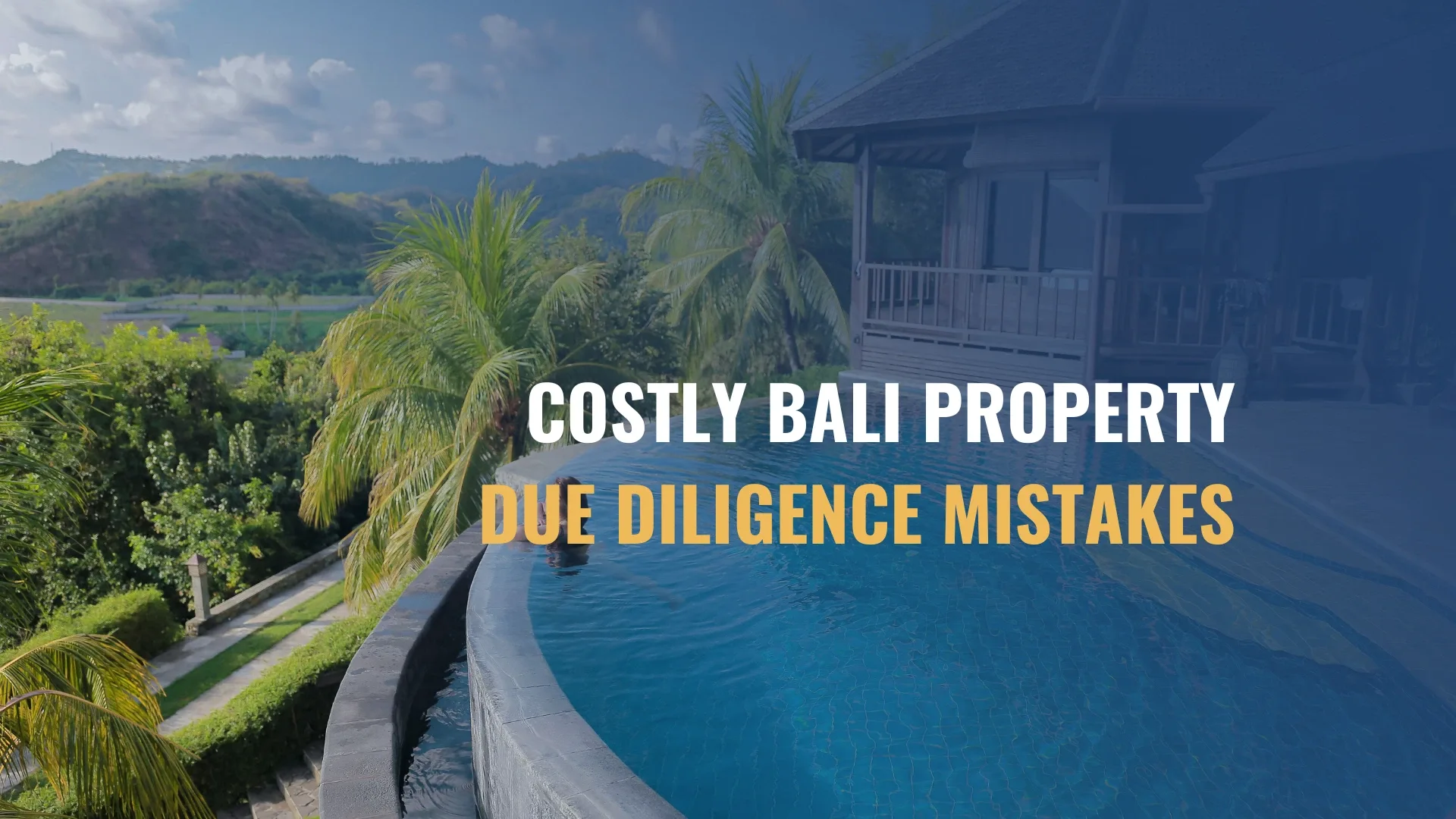

Bali continues to attract investors from around the world. From luxury villas and boutique resorts to wellness centers and commercial developments, the island remains one of Southeast Asia's most sought-after investment destinations. However, while the opportunities are significant, so are the risks.
A recent high-profile case involving an Australian entrepreneur and influencer who reportedly lost approximately IDR 6.2 billion (often reported in international media as approximately AUD 620,000) in a disputed Bali land transaction highlights an important lesson for every investor: Bali property due diligence is not optional.
The case attracted international attention because it demonstrated how even experienced businesspeople can encounter serious problems when investing in foreign property markets. More importantly, it reinforced why Bali property due diligence should be one of the first steps taken before committing funds to any land or property transaction.
The Bali Dream and the Investment Reality
Many foreign investors arrive in Bali with ambitious plans. Some want to develop villas, while others plan to establish hospitality businesses, wellness retreats, restaurants, or long-term investment properties.
The island's growing tourism sector, strong international brand, and attractive lifestyle continue to drive demand. However, successful investment requires more than identifying a promising piece of land.
Without proper Bali property due diligence, investors may face issues involving:
- Land ownership disputes
- Zoning restrictions
- Invalid permits
- Nominee arrangements
- Incomplete documentation
- Development limitations
The Australian investor's experience serves as a reminder that enthusiasm should never replace professional Bali property due diligence.
What Happened in the Case?
According to publicly reported information, the investor entered a land transaction in Bali expecting to secure valuable property for future development. However, disputes later arose regarding the transaction, leading to significant financial losses.
While every case involves unique circumstances, the situation highlights several common challenges encountered in Bali's property market.
These include:
- Reliance on verbal assurances
- Insufficient legal verification
- Lack of independent advice
- Incomplete ownership reviews
- Failure to conduct comprehensive Bali property due diligence
Many foreign investors mistakenly assume that if a transaction appears legitimate, additional verification is unnecessary. Unfortunately, property disputes often arise precisely because critical aspects of Bali property due diligence were overlooked.
Why Bali Property Due Diligence Matters
The primary purpose of Bali property due diligence is to identify risks before money changes hands.
Professional Bali property due diligence typically involves reviewing:
- Land certificates
- Ownership history
- Encumbrances
- Zoning regulations
- Spatial planning restrictions
- Existing permits
- Access rights
- Tax obligations
- Environmental considerations
By conducting proper Bali property due diligence, investors gain a clearer understanding of what they are actually purchasing and whether the property can legally support their intended plans.
Understanding Land Ownership Restrictions
One of the most important aspects of Bali property due diligence involves understanding Indonesia's land ownership framework.
Foreign individuals generally cannot directly own freehold land (Hak Milik) in Indonesia. Instead, investors typically utilize alternative structures depending on their objectives.
Common arrangements include:
- Leasehold agreements
- Hak Pakai rights
- PT PMA structures
- Commercial land rights
Because ownership rules can be complex, professional Bali property due diligence is essential before entering any transaction.
Failure to understand these regulations can create significant legal and financial risks.
The Risks of Relying on Informal Arrangements
Historically, some foreign investors attempted to bypass ownership restrictions through nominee arrangements.
Under these arrangements, property is registered under the name of an Indonesian citizen while the foreign investor provides the funding.
However, numerous legal experts and court decisions have highlighted the risks associated with such structures.
This is why comprehensive Bali property due diligence should include a review of ownership structures and legal documentation.
Investors should ensure that their chosen structure complies with Indonesian law and aligns with their long-term objectives.
Zoning and Land Use Restrictions
Another critical element of Bali property due diligence involves zoning verification.
Not all land marketed for development can legally be used for:
- Villas
- Hotels
- Restaurants
- Commercial facilities
- Tourism businesses
Recent regulatory developments have made zoning even more important.
Bali Provincial Regulation No. 4 of 2026 introduced stricter controls over productive agricultural land and reinforced efforts to prevent unauthorized land conversion.
As a result, Bali property due diligence should always include verification of:
- Land zoning
- Spatial planning designation
- LP2B status
- Development restrictions
Investors who skip these checks may discover later that development approvals cannot be obtained.
Why Cheap Land Can Be Expensive
Many property disputes begin with what appears to be an attractive bargain.
Investors may find land offered below market value and feel pressure to move quickly.
However, experienced advisors often recommend increasing Bali property due diligence efforts whenever a deal appears unusually attractive.
Cheap land may involve:
- Ownership disputes
- Access issues
- Zoning limitations
- Permit problems
- Encumbrances
- Ongoing legal proceedings
The Australian investor's case illustrates how insufficient Bali property due diligence can ultimately become far more expensive than the original purchase price.
Due Diligence and PT PMA Investments
Foreign investors planning commercial activities often establish a PT PMA company.
When using a PT PMA structure, Bali property due diligence becomes even more important because the investment may involve:
- Commercial licensing
- OSS registration
- KBLI classifications
- Tax compliance
- Employment obligations
- LKPM reporting
Property transactions should always be evaluated alongside the broader business strategy.
Professional Bali property due diligence helps ensure that the property supports the intended commercial activities.
Key Questions Every Investor Should Ask
Before purchasing land or property in Bali, investors should ask several important questions:
Who legally owns the land?
Ownership verification is one of the foundations of Bali property due diligence.
Is the zoning compatible with the intended project?
Zoning review is another essential component of Bali property due diligence.
Are there any disputes or claims?
Legal checks should identify potential issues before acquisition.
Can the required licenses be obtained?
Investors should evaluate licensing requirements as part of Bali property due diligence.
Is the ownership structure compliant?
Proper structuring helps reduce future risks.
The Growing Importance of Regulatory Compliance
Indonesia's investment environment continues to evolve.
Recent developments include:
- PP No. 28 of 2025
- KBLI 2025 implementation
- Enhanced OSS compliance requirements
- Increased land-use enforcement
- Stronger scrutiny of nominee arrangements
These changes make Bali property due diligence more important than ever.
Investors who conduct thorough reviews are generally better positioned to navigate regulatory requirements and avoid unexpected complications.
Learning From Other Investors' Mistakes
One of the most valuable aspects of studying real-world cases is the opportunity to learn without personally experiencing the consequences.
The Australian investor's reported loss demonstrates that:
- Experience alone is not enough
- Trust should not replace verification
- Independent advice is critical
- Documentation matters
- Bali property due diligence protects investments
Many disputes could potentially have been avoided through earlier identification of risks.
Building a Safer Investment Strategy
Successful investors rarely rely on assumptions.
Instead, they approach transactions systematically and prioritize Bali property due diligence throughout the acquisition process.
A comprehensive strategy typically includes:
- Legal review
- Land verification
- Zoning analysis
- Regulatory assessment
- Tax planning
- Business structuring
- Permit evaluation
This approach helps investors make informed decisions while reducing unnecessary risks.
Source:
FAQ

Share the blog


Related News


SYNERGY PRO Business & Legal Consulting
Social Media


