.png)


Hidden Lombok Land Access Issues: 9 Legal Roadblocks Every Bali & Lombok Developer Must Know
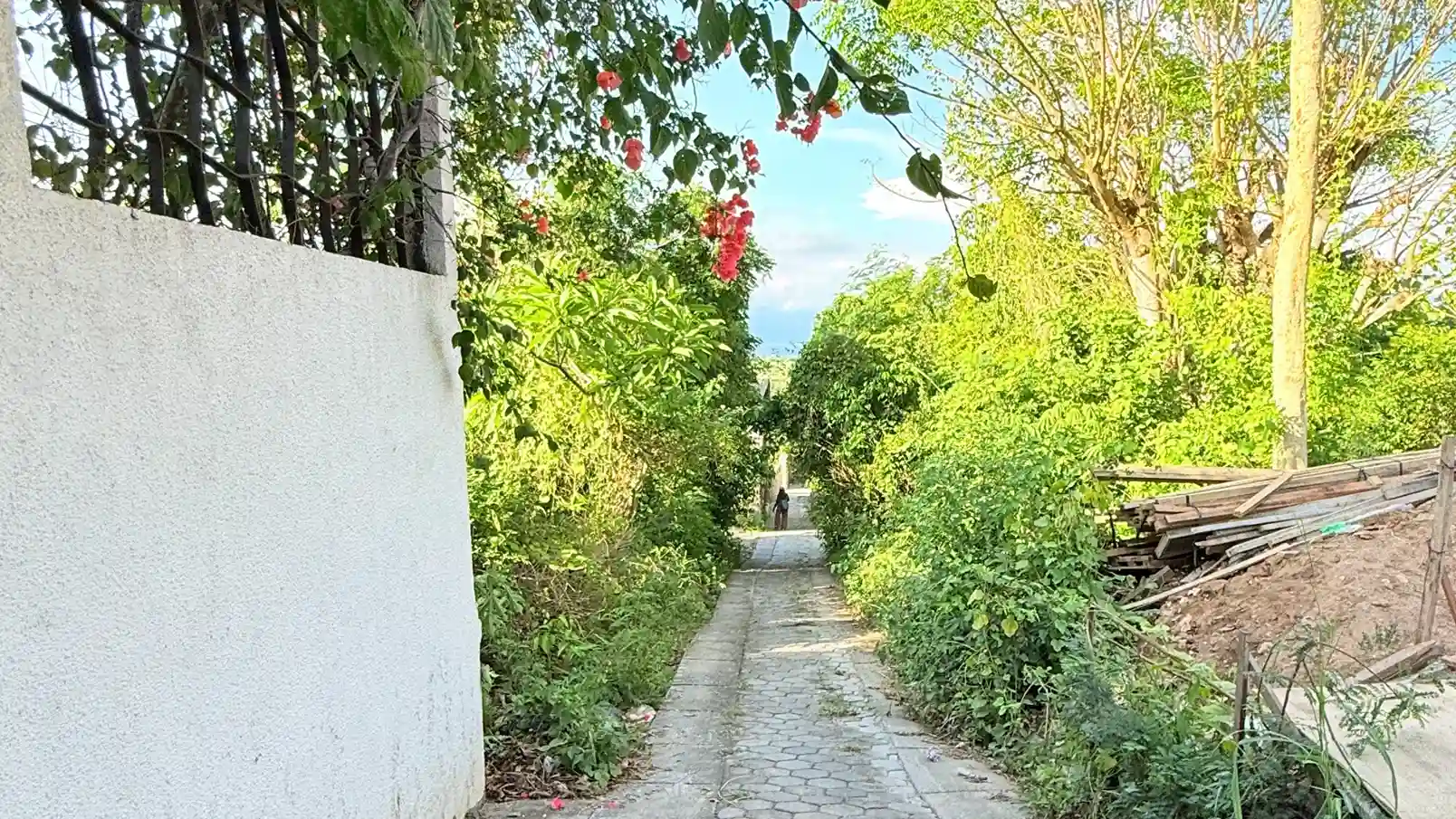
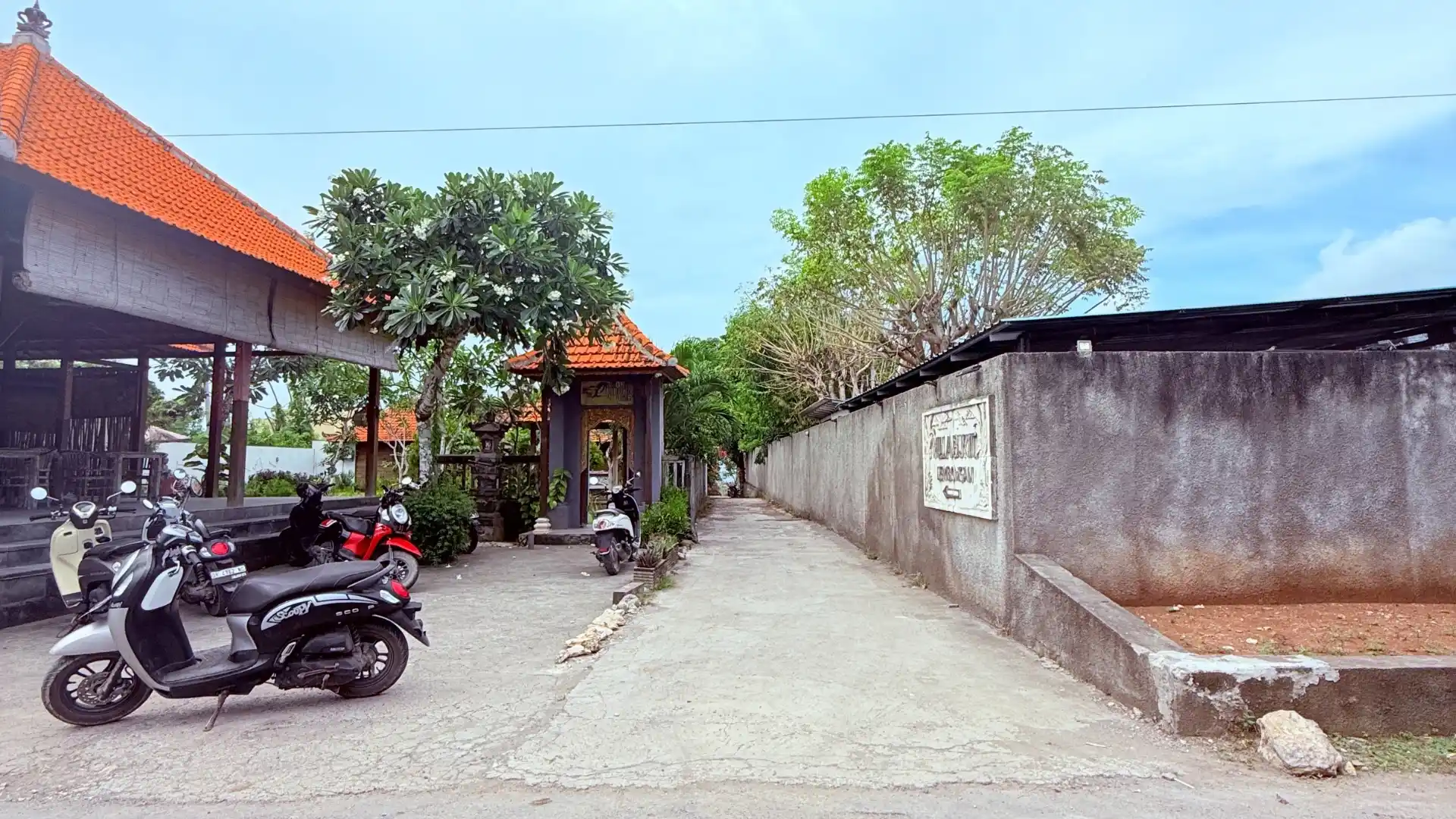
Hidden Gateways: Why Access Rights Define Lombok Property Risk
Land access is one of the most underestimated variables in Lombok property investments, especially among foreign and first-time domestic investors. Many assume that if a road is visible and usable, it must also be legally recognized. In reality, Lombok Land Access is often far more complex than what appears on the ground.
Unclear or informal access can quietly derail an otherwise promising project. Permit applications may be rejected, utility connections delayed, and financing complicated when banks discover the land lacks a registered right of way. Even resale value is affected, as future buyers and notaries will scrutinize access more carefully than marketing brochures ever do.
This is why access due diligence should never be treated as a technical afterthought. For villas, resorts, and mixed-use developments in Lombok, confirming legal access status is a foundational step, one that determines whether the land can be developed, operated, and transferred with certainty.
Legal Access vs. Visible Roads: What Indonesian Land Law Actually Recognizes
One of the most common misconceptions in property transactions is assuming that physical access automatically equals legal access. Under Indonesian land law, Lombok Land Access is determined not by what exists on the ground, but by what is formally recorded and recognized by the authorities.
A clear distinction must be made between public roads, private roads, and rights of way (hak jalan or hak lewat). Public roads are managed by the state or regional government and clearly recorded in spatial and infrastructure planning. Private roads, on the other hand, belong to individuals or entities and may only be used with the owner’s consent. Rights of way are specific legal rights registered to allow passage across another person’s land, and these must be expressly documented to be enforceable.
The National Land Agency (BPN) plays a critical role in this process. Land certificates should reflect not only ownership boundaries but also any registered easements or access rights. When access is missing from the certificate or supporting land book, the risk profile of the property changes significantly.
This is why Lombok Land Access disputes frequently arise even when a land title appears valid. A certificate can confirm ownership, yet remain silent on access, leaving investors exposed to objections, permit denials, or future claims once development begins.
#1 Unregistered Community Roads: When Long-Used Paths Have No Legal Power
One of the earliest and most underestimated red flags in Lombok developments is the use of informal roads that have never been legally registered. These paths are often described as “community roads” or generational access routes, used openly for years without written agreements or formal recognition. From a legal standpoint, however, Lombok Land Access is not created by habit or duration of use, but by registration and documented rights.
Problems emerge when the underlying landowner decides to revoke access, sell the land, or dispute its use. What once appeared to be a stable entry point can disappear overnight. For villa and resort projects, this immediately impacts zoning approvals, PBG issuance, utility connections, and even financing eligibility, as banks typically require verified access rights.
Many Lombok land access disputes stem from reliance on verbal assurances or assumptions that “everyone has always used this road.” Without a registered right of way or public road status, such access has no enforceable protection, exposing investors to delays, redesign costs, or complete project failure.
#2 When “Public” Roads Are Actually Private Property
A frequent surprise for investors is discovering that an access road widely used by the public is, in fact, privately owned by an individual or a family. These roads may look official, be paved, or even connect multiple plots, yet legally remain part of a private land title. In Lombok Land Access reviews, this scenario repeatedly emerges as a critical risk that is only identified during deeper due diligence.
Without a registered easement or right of way, the landowner retains full authority to restrict, charge for, or completely block access in the future. This creates immediate consequences for construction logistics, emergency vehicle entry, waste management, and daily resort or villa operations. Even if access is tolerated today, ownership changes, inheritance disputes, or shifting family interests can quickly alter the situation.
This is why privately owned access roads remain one of the most common Lombok land access issues, capable of undermining permits, insurance coverage, and long-term asset value if left unresolved.
#3 When Access Rights Exist on Paper, but Not in Law
Easements are often assumed to be simple add-ons to a land transaction, yet legally valid access rights must meet strict criteria under Indonesian land law. A proper easement must clearly define the access route, width, permitted use, duration, and the identities of both the burdened and benefiting land parcels. Without this clarity, the right of way becomes vulnerable to challenge.
One of the most common mistakes appears in notarized agreements that acknowledge “shared access” but stop short of establishing a registered easement. These private contracts may be signed in good faith, but if they are not structured as enforceable rights and formally recorded, they offer little protection. Registration with the National Land Agency (BPN) is essential for the easement to bind future owners and remain legally effective.
When access rights are informal, incomplete, or unregistered, Lombok Land Access risks multiply. Undocumented easements frequently resurface during permitting, financing, or resale, turning what seemed like a minor omission into a major legal obstacle.
#4 When Roads Exist but Fail Development Standards
Not all access roads that reach a plot of land are considered suitable for development. Under Indonesia’s building regime, minimum road width and technical specifications are critical prerequisites for obtaining a Building Approval (PBG) and a Certificate of Feasibility (SLF). These standards are designed to ensure safe construction activity, emergency response access, and long-term operational viability.
Many sites in Lombok rely on narrow village roads that function well for daily traffic but fall short of regulatory expectations. Fire engines, ambulances, and construction vehicles often require wider clearances, turning radii, and load-bearing capacity that these informal roads simply cannot provide. When these conditions are not met, permit applications are frequently delayed, revised, or outright rejected.
This is where Lombok Land Access problems become more than a legal formality. Even with valid ownership and zoning, failure to meet technical access standards can halt development entirely, forcing costly redesigns or land acquisition negotiations that were never factored into the original investment.
#5 Access Denied by Planning Maps, Not Ownership
Even where a road is legally registered, zoning and spatial planning rules can still prevent it from being used to support a development. Regional Spatial Plans (RTRW) and Detailed Spatial Plans (RDTR) regulate not only what can be built on a plot, but also how access routes may cross surrounding land. In Lombok, this often becomes an invisible constraint for investors who focus only on ownership documents.
Access roads that pass through agricultural zones, green belts, or protected areas may be legally recorded yet prohibited for construction-related use or infrastructure upgrading. Widening a road, reinforcing it for heavy vehicles, or installing utilities can be restricted or entirely disallowed under these planning frameworks. As a result, a technically “legal” road may be unusable for villa or resort development purposes.
These planning-layer conflicts significantly deepen Lombok Land Access challenges, as zoning restrictions can override private agreements and force investors to rethink layouts, scale, or even the viability of the project itself.
#6 When Boundaries Shift: Disputes That Block Access Overnight
Boundary inaccuracies are a frequent but underestimated trigger of access failure in Lombok developments. Many plots still rely on outdated measurements, hand-drawn maps, or legacy certificates that no longer align with current BPN survey data. When access roads sit near or along these boundaries, even small discrepancies can escalate into serious disputes.
Encroachment by neighboring landowners is another common issue. What appears to be a shared or neutral access route may partially fall within an adjacent title, allowing the neighbor to fence, block, or claim compensation rights. Once objections are raised, developers often face immediate construction stoppages while the dispute is examined.
These conflicts frequently lead to prolonged mediation or court proceedings, freezing permit issuance, financing, and contractor mobilization. Boundary-related Lombok Land Access risks are often overlooked during early negotiations, yet they can derail an otherwise sound investment long before the first foundation is poured.
#7 When Customary Rights Override Paper Titles
In Lombok, formal land certificates do not always reflect who exercises real control on the ground. Many access paths pass through land governed by customary (adat) authority, where community recognition carries significant weight alongside statutory law. While a title may appear clean under national land registration, the absence of local consent can quickly undermine practical access.
Customary control operates through social legitimacy rather than written agreements. Investors who rely solely on notarized deeds or registered titles often discover that access routes are informally managed by village groups or adat leaders. When development begins without proper engagement, communities may restrict use, demand renegotiation, or challenge access entirely.
Ignoring these dynamics creates Lombok Land Access vulnerabilities that go beyond legal technicalities. Delays, reputational damage, and stalled permits frequently arise when social acceptance is overlooked. In practice, securing sustainable access requires aligning formal documentation with community understanding, ensuring access paths are not only legally defensible but also locally respected.
#8 Infrastructure Access Risks Beyond the Main Road
Road access alone does not guarantee a development can operate. In many Lombok projects, electricity lines, water supply, drainage, and telecommunications must pass through neighboring plots before reaching the site. When these routes cross third-party land without formally registered rights, projects face hidden exposure that often emerges late in the development cycle.
Utility access requires its own legal basis. Easements for roads do not automatically cover power cables, water pipes, or drainage systems. Investors frequently discover that while vehicles can reach the land, utilities cannot be installed without additional approvals or negotiations. These gaps can delay PBG and SLF approvals, postpone openings, and increase holding costs.
Such infrastructure dependencies are a common but underestimated element of Lombok Land Access risk. Without secured utility corridors, even well-located land can remain non-operational. Comprehensive due diligence must therefore assess not only how people access the land, but how essential services legally reach it as well.
#9 The Due Diligence Trap: When Marketing Masks Legal Reality
One of the final and most damaging legal roadblocks arises long before construction begins at the acquisition stage itself. Many investors rely heavily on agent assurances, glossy visuals, and on-site impressions, assuming that visible roads and nearby developments confirm legal readiness. This overconfidence is where Lombok Land Access risks are often unknowingly locked into the transaction.
Standard notary checks typically verify ownership documents, but they do not always assess access legality, zoning compatibility, easement registration, or third-party control over roads and utilities. Full legal due diligence goes further, testing whether access rights are enforceable, registrable, and aligned with development permits. The gap between these two approaches is frequently misunderstood.
Marketing narratives focus on potential, “resort-ready,” “villa zoning,” or “easy access”, while regulatory reality is shaped by spatial plans, land registration data, and enforceable rights. When these are not aligned, Lombok Land Access issues emerge after purchase, when reversing the decision becomes costly or impossible.
From Risk to Readiness: A Practical Framework to Secure Legal Access
Properly addressing access challenges requires more than intuition or visual confirmation. A structured mitigation approach is essential to prevent Lombok Land Access risks from undermining development feasibility and long-term investment value.
The first step is formal land and access verification with BPN. This includes reviewing the land certificate, cadastral maps, and any registered easements or rights of way. Investors must confirm whether access is legally recorded, not merely tolerated. At this stage, Lombok Land Access concerns often surface when roads assumed to be public are absent from official records.
Next, spatial planning and zoning checks under the applicable RTRW and RDTR should be conducted. These reviews determine whether the access route is legally usable for the intended development type and whether road width, classification, and usage align with permitting requirements. Even when access exists, zoning inconsistencies can trigger Lombok Land Access obstacles during PBG or SLF applications.
On-site technical surveys and neighbor confirmations follow. Licensed surveyors can validate boundaries, road alignment, and encroachment risks, while direct engagement with adjacent landowners helps identify potential disputes, informal arrangements, or customary claims that may not appear in documents.
Where access or utilities cross third-party land, enforceable legal structures must be established. This includes notarized and registered easements for roads, electricity, water, and drainage, ensuring rights are binding on future owners. Verbal agreements or unregistered permissions leave Lombok Land Access vulnerabilities unresolved.
Early mitigation transforms access from a hidden liability into a protected asset. By resolving legal, technical, and social dimensions upfront, investors safeguard permitting timelines, operational continuity, and the long-term value of their Lombok developments.
Final Insights: Turning Access Risk into Investment Discipline
For developers and investors, access is not a technical footnote, it is a core financial and legal exposure that can determine whether a project proceeds, stalls, or fails entirely. Lombok Land Access challenges directly affect permitting certainty, construction logistics, operational continuity, and ultimately the asset’s marketability. When access is unclear or unenforceable, the risk profile of the entire investment changes.
One of the most critical lessons is timing. Lombok Land Access issues must be identified and resolved before signing any binding agreement, not after land acquisition. Once capital is committed, negotiating access rights becomes more complex, costly, and uncertain, particularly when third-party landowners or community interests are involved.
Access strategy should also be aligned with the broader development lifecycle. Clear and legally registered access supports smoother PBG and SLF approvals, strengthens bankability for project financing, and improves exit options, whether through resale, joint ventures, or portfolio consolidation. Unresolved Lombok Land Access risks, by contrast, often surface during due diligence by lenders or buyers, leading to valuation discounts or deal collapse.
Ultimately, sustainable development in Lombok requires disciplined preparation. Professional legal and technical reviews, covering land status, access rights, zoning, and infrastructure pathways are not optional safeguards but essential investment tools. By treating access as a strategic priority rather than an assumption, developers protect capital, timelines, and long-term project viability.
Source:
FAQ

Share the blog


Related News


SYNERGY PRO Business & Legal Consulting
Social Media


