.png)


Powerful Bali Rice Field Conversion Regulation Changes Every Investor Must Know in 2026

Why Bali Introduced the New Regulation
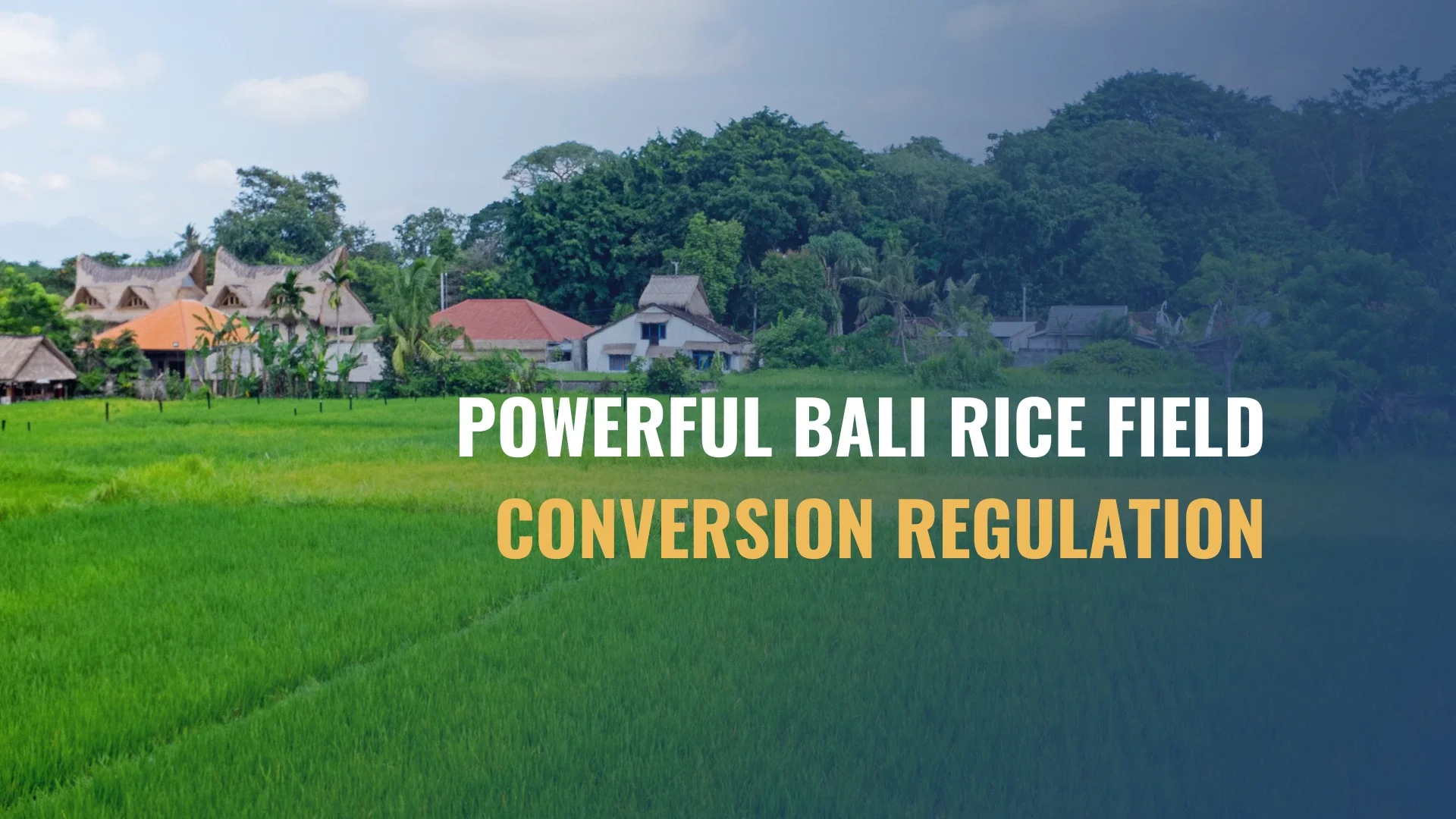
The primary objective of the Bali rice field conversion regulation is to protect Bali's productive agricultural land from uncontrolled development.
For years, local authorities have expressed concern about the declining amount of farmland across the island. Many agricultural areas have been converted into tourism-related developments, particularly in high-demand regions such as:
- Canggu
- Pererenan
- Seseh
- Cemagi
- Uluwatu
- Ubud
- Tabanan
The continued reduction of agricultural land has raised concerns regarding:
- Food security
- Environmental sustainability
- Water resource management
- Cultural preservation
- Traditional Balinese farming systems
The Bali rice field conversion regulation seeks to address these challenges by strengthening legal protections for designated agricultural areas.
What Is the Bali Rice Field Conversion Regulation?
The Bali rice field conversion regulation refers primarily to the framework established under Bali Provincial Regulation No. 4 of 2026 concerning the control of productive land conversion and the prevention of nominee ownership practices.
The regulation introduces stricter oversight of:
- Agricultural land conversion
- Land utilization
- Property development
- Foreign ownership structures
- Nominee arrangements
The Bali rice field conversion regulation reflects the provincial government's commitment to preserving productive agricultural land while ensuring that development occurs in accordance with applicable laws and spatial planning requirements.
For investors, the regulation represents a significant shift toward increased compliance and enforcement.
Understanding LP2B: Protected Agricultural Land
One of the most important concepts within the Bali rice field conversion regulation is the protection of LP2B (Lahan Pertanian Pangan Berkelanjutan), or Sustainable Food Agricultural Land.
LP2B areas are designated agricultural zones intended to support long-term food production and agricultural sustainability.
Under the Bali rice field conversion regulation, these protected areas receive enhanced legal protection against unauthorized conversion.
This means that landowners and developers cannot simply assume that agricultural land can be transformed into tourism or commercial projects.
Before acquiring land, investors should carefully verify:
- Land zoning
- Spatial planning designations
- LP2B status
- Development restrictions
- Permit requirements
Failure to conduct adequate due diligence could expose investors to significant legal and financial risks under the Bali rice field conversion regulation.
Illegal Villa Developments Under Increased Scrutiny
A major focus of the Bali rice field conversion regulation is the growing number of villa developments constructed on land that may not have been properly authorized for tourism-related activities.
Over the past several years, Bali has experienced an unprecedented villa construction boom.
In many cases, concerns have emerged regarding:
- Zoning compliance
- Building permits
- Land-use permits
- Agricultural land conversion approvals
- Environmental requirements
The Bali rice field conversion regulation aims to strengthen enforcement against developments that do not comply with applicable regulations.
This is particularly relevant for investors seeking to build:
- Villas
- Boutique resorts
- Hospitality projects
- Tourism accommodations
- Commercial facilities
The regulation signals that authorities are taking a more active approach to monitoring land use and development activities.
The Growing Concern Over Nominee Agreements
Another major component of the Bali rice field conversion regulation is its focus on nominee ownership arrangements.
Nominee agreements have long been a controversial issue in Indonesian property investment.
In a typical nominee structure, a foreign individual provides the funds for a property acquisition while legal ownership is placed under the name of an Indonesian citizen.
Although such arrangements have been used by some investors attempting to circumvent foreign ownership restrictions, they often create substantial legal risks.
The Bali rice field conversion regulation specifically highlights the government's intention to address nominee practices that are inconsistent with Indonesian law.
Authorities have indicated concerns that nominee arrangements may contribute to:
- Unregulated development
- Improper land utilization
- Legal uncertainty
- Difficulties in regulatory enforcement
As a result, foreign investors should exercise caution when considering property structures that rely on nominee arrangements.
Property Compliance Is Becoming More Important Than Ever
One of the key messages behind the Bali rice field conversion regulation is that regulatory compliance can no longer be treated as a secondary consideration.
In the past, some investors focused primarily on commercial opportunities while paying limited attention to land status and development restrictions.
Today, authorities are placing greater emphasis on:
- Legal certainty
- Sustainable development
- Agricultural protection
- Environmental management
- Responsible investment
The Bali rice field conversion regulation reflects this broader policy direction.
For investors, developers, and landowners, understanding these requirements is becoming an essential part of risk management.
What Investors Should Do Before Acquiring Land
Given the increased scrutiny associated with the Bali rice field conversion regulation, investors should undertake thorough due diligence before proceeding with any property transaction.
Important considerations may include:
- Verifying zoning classifications
- Confirming LP2B status
- Reviewing spatial planning regulations
- Assessing permit requirements
- Evaluating ownership structures
- Confirming development feasibility
Obtaining professional legal and regulatory advice before making investment decisions can help reduce risks associated with non-compliant land acquisitions.
The Bali rice field conversion regulation demonstrates that regulatory compliance is becoming a critical factor in the long-term success of property investments in Bali.
Administrative and Criminal Sanctions
One of the most significant aspects of the Bali rice field conversion regulation is the introduction of stricter enforcement mechanisms against unauthorized land conversion and unlawful development activities.
Under Bali Provincial Regulation No. 4 of 2026, authorities have been granted broader powers to monitor land use and take action against violations involving protected agricultural land.
Depending on the nature and severity of the violation, consequences may include:
- Written warnings
- Suspension of permits
- Revocation of business licenses
- Project cancellation
- Demolition orders
- Administrative fines
- Potential legal proceedings under applicable national laws
The Bali rice field conversion regulation sends a clear message that unauthorized development on protected agricultural land is no longer viewed as a minor administrative issue.
For investors, developers, and landowners, compliance should be considered from the earliest stages of project planning.
How the Regulation Affects PT PMA Companies
The Bali rice field conversion regulation is particularly relevant for foreign investors operating through PT PMA companies.
Many foreign investors enter Bali's property and hospitality sectors through PT PMA structures to develop:
- Villas
- Boutique hotels
- Resorts
- Restaurants
- Wellness centers
- Tourism facilities
While PT PMA companies remain a legitimate investment vehicle, the Bali rice field conversion regulation reinforces the need for careful site selection and regulatory compliance.
Investors should not assume that all land marketed as suitable for development can legally be used for commercial purposes.
Before purchasing or leasing land, PT PMA companies should verify:
- Zoning status
- Spatial planning compliance
- LP2B classification
- Environmental requirements
- Licensing obligations
The Bali rice field conversion regulation highlights the importance of integrating legal due diligence into every stage of the investment process.
Why Due Diligence Is More Important Than Ever
One of the key lessons from the Bali rice field conversion regulation is that property transactions should never rely solely on marketing materials or informal assurances.
Some investors have historically purchased land based on:
- Location attractiveness
- Expected rental returns
- Verbal representations
- Informal ownership structures
However, the introduction of the Bali rice field conversion regulation increases the risks associated with inadequate due diligence.
Before committing to a property investment, investors should review:
- Land certificates
- Zoning maps
- Spatial plans
- Development restrictions
- Existing permits
- Ownership structures
Conducting professional legal and regulatory reviews can help identify potential issues before significant capital is committed.
The Future of Bali's Property Market
Although some investors may view the Bali rice field conversion regulation as restrictive, many industry observers believe it could strengthen Bali's long-term investment environment.
Uncontrolled development has created growing concerns regarding:
- Traffic congestion
- Infrastructure pressure
- Environmental degradation
- Water shortages
- Loss of cultural landscapes
By protecting productive agricultural land, the Bali rice field conversion regulation seeks to create a more sustainable balance between tourism growth and environmental preservation.
In the long term, this may help maintain the characteristics that make Bali attractive to visitors and investors in the first place.
A more regulated market can also provide greater legal certainty for compliant investors.
Sustainable Development Is Becoming a Priority
The broader policy objective behind the Bali rice field conversion regulation extends beyond enforcement.
The regulation reflects Bali's efforts to promote:
- Sustainable tourism
- Responsible development
- Agricultural preservation
- Cultural protection
- Long-term economic resilience
As tourism continues to evolve, investors may increasingly find that sustainable projects receive stronger support from local communities and authorities.
The Bali rice field conversion regulation demonstrates that future development is expected to consider not only profitability but also environmental and social impacts.
Source:
FAQ

Share the blog


Related News


SYNERGY PRO Business & Legal Consulting
Social Media


