.png)


Understanding 8 Bali's Zoning Color System
What Is Bali's Zoning Color System?
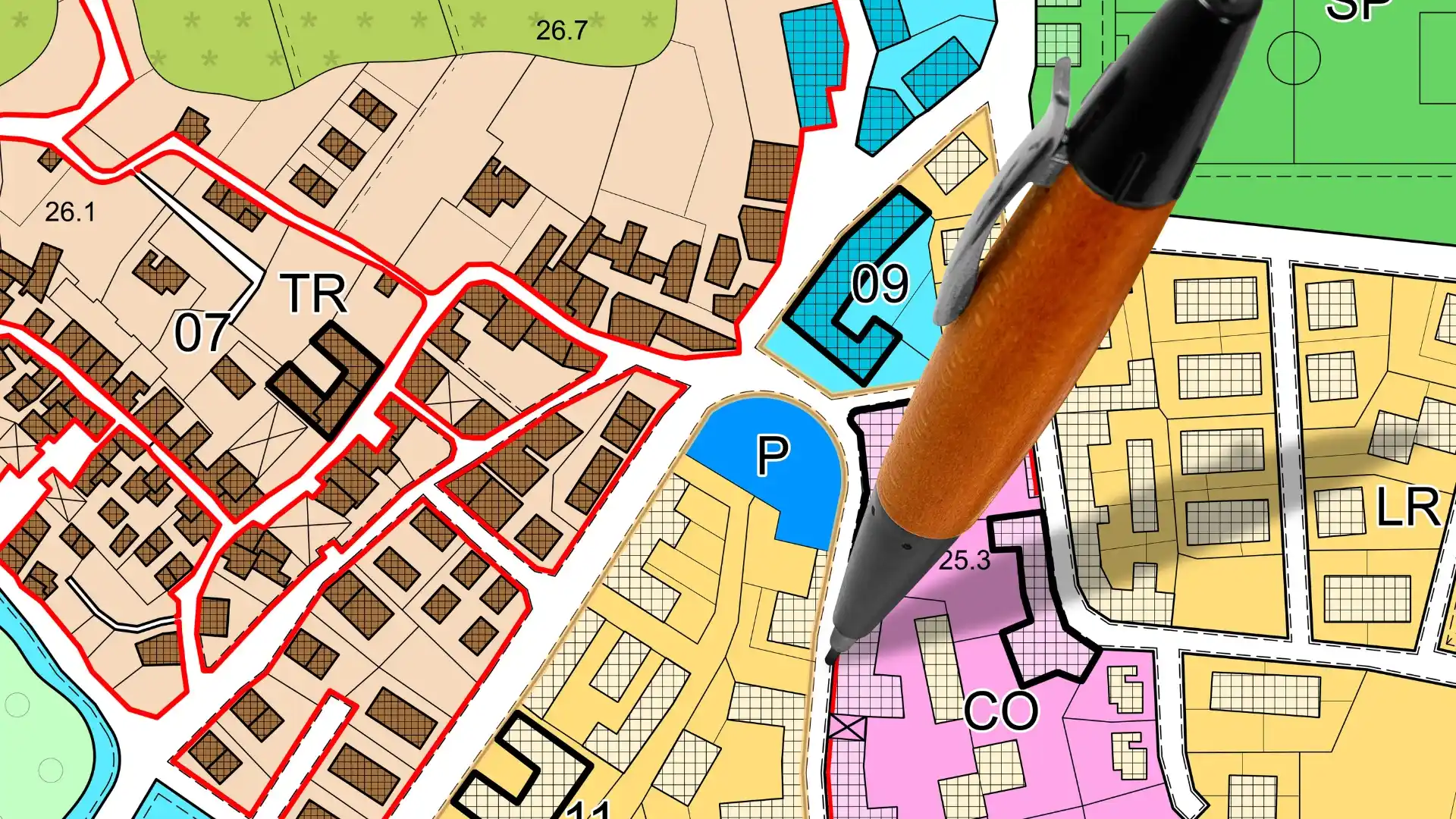
Bali's Zoning Color System is a visual representation of land-use designations used in Bali's spatial planning documents. Each color identifies how a particular area is intended to be used and what types of development are generally permitted.
Although the exact zoning map may differ slightly between regencies and municipalities, Bali's Zoning Color System follows similar principles throughout the island. The colors help government authorities, developers, architects, and investors quickly identify whether land is intended for residential, tourism, commercial, industrial, agricultural, public facilities, conservation, or water protection purposes.
It is important to understand that Bali's Zoning Color System is only the first step in evaluating a property. Investors should always verify the official zoning designation through the applicable RDTR and consult with qualified legal professionals before making investment decisions.
The Eight Main Zoning Colors
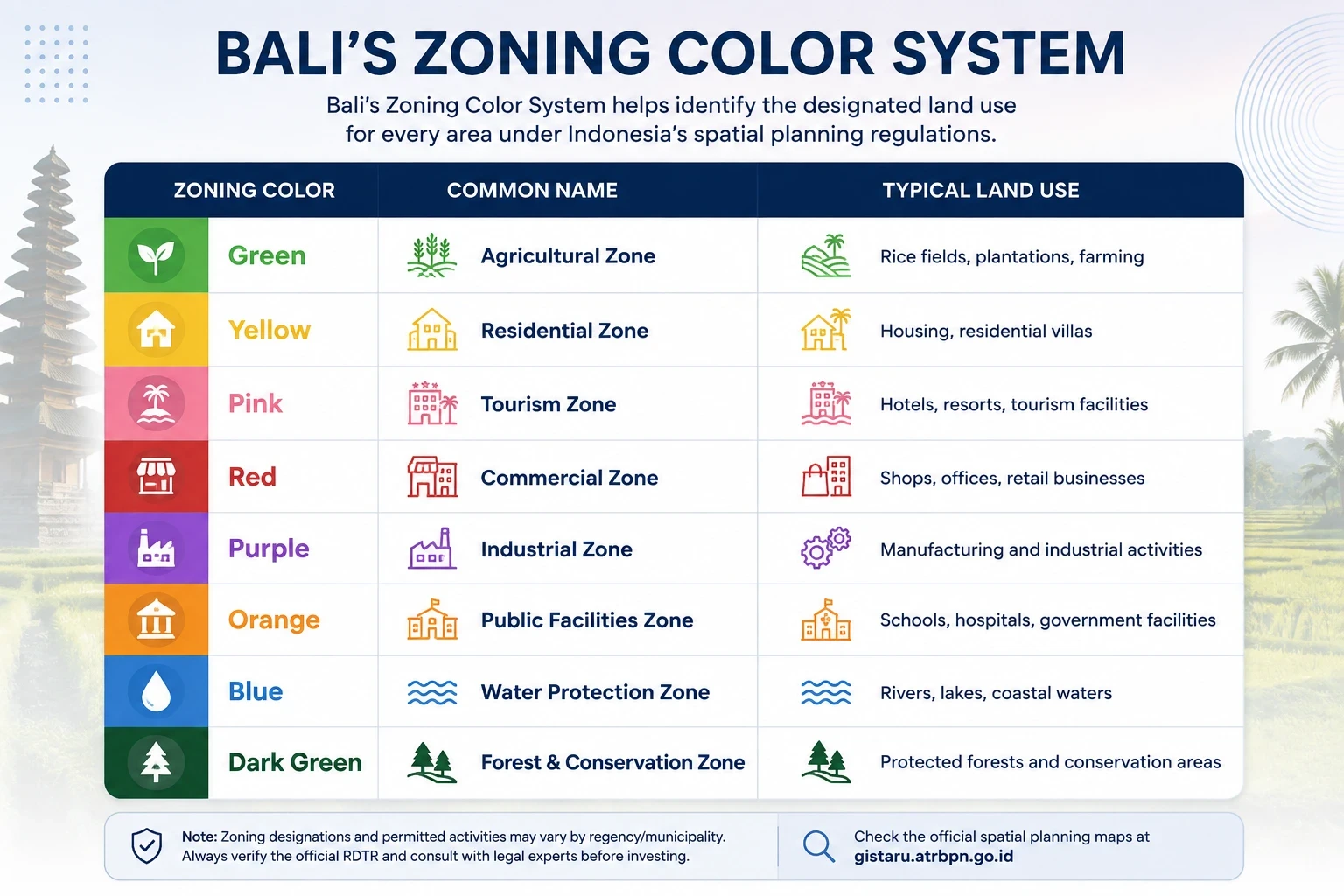
Each category within Bali's Zoning Color System serves a different planning objective, and understanding these distinctions is essential before purchasing land.
1. Green Zone (Agricultural Zone)
Among all categories within Bali's Zoning Color System, the Green Zone is one of the most misunderstood by foreign investors.
Green Zones are primarily intended to preserve agricultural activities, protect productive farmland, and support Bali's traditional Subak irrigation system, which is recognized as a UNESCO World Heritage cultural landscape. These areas are essential for maintaining food security, environmental sustainability, and Bali's cultural heritage.
Typical Green Zone land includes:
- Rice fields
- Plantations
- Agricultural land
- Open farming areas
Because many Green Zone properties offer beautiful rice-field views, they are often marketed as attractive investment opportunities. However, investors should understand that these areas generally have strict development limitations.
Building commercial villas, hotels, or tourism facilities on Green Zone land may require additional approvals or may not be permitted under the applicable spatial planning regulations. In some locations, agricultural land is also protected under Sustainable Food Agricultural Land (LP2B) policies, making land conversion even more restrictive.
Before purchasing any agricultural property, investors should carefully review Bali's Zoning Color System and conduct comprehensive legal due diligence.
2. Yellow Zone (Residential Zone)
Yellow Zones represent residential areas within Bali's Zoning Color System.
These areas are generally intended for permanent housing and supporting community facilities. Typical developments include:
- Private homes
- Residential villas
- Housing estates
- Community facilities
- Neighborhood infrastructure
Many leasehold villas purchased by foreign investors are located within Yellow Zones because they provide suitable locations for residential living.
However, one common misconception is that any villa located in a Yellow Zone can automatically operate as a commercial short-term rental property.
Depending on the applicable RDTR, business licensing requirements, and local government policies, commercial accommodation activities may require additional approvals or different zoning considerations.
Investors planning to generate income from villa rentals should verify that their intended business model complies with Bali's Zoning Color System before proceeding.
3. Pink Zone (Tourism Zone)
Pink Zones are among the most desirable categories within Bali's Zoning Color System for hospitality investors.
These zones are generally intended to support Bali's tourism industry and accommodate businesses such as:
- Hotels
- Resorts
- Boutique villas
- Restaurants
- Wellness retreats
- Beach clubs
- Tourism attractions
- Recreation facilities
Because tourism is one of Bali's primary economic sectors, Pink Zones often provide greater flexibility for hospitality-related developments compared to residential areas.
Nevertheless, investors should remember that zoning alone does not guarantee project approval. Developments within Tourism Zones must still comply with building setbacks (Sempadan), environmental regulations, Building Approval (PBG), fire safety standards, and other licensing requirements.
Understanding how Tourism Zones fit within Bali's Zoning Color System helps investors make more informed decisions when selecting property for hospitality businesses.
4. Red Zone (Commercial Zone)
Red Zones represent commercial and business districts under Bali's Zoning Color System.
These areas are intended for business activities that support trade, commerce, and professional services.
Typical developments include:
- Office buildings
- Retail stores
- Shopping centers
- Restaurants
- Cafés
- Banks
- Business centers
- Mixed-use commercial properties
Commercial Zones are generally suitable for businesses that require customer access and commercial visibility. However, investors should still confirm that their proposed activities align with the applicable RDTR and licensing requirements.
Even within commercial areas, compliance with Bali's Zoning Color System, Building Approval (PBG), environmental regulations, and business licensing remains essential before construction or operations begin.
5. Purple Zone (Industrial Zone)
Within Bali's Zoning Color System, the Purple Zone is designated for industrial and manufacturing activities. Although Bali is internationally recognized as a tourism destination, certain areas are allocated for industrial development to support logistics, manufacturing, processing, and warehousing.
Typical developments in Purple Zones include:
- Manufacturing facilities
- Processing plants
- Distribution centers
- Warehouses
- Industrial workshops
- Logistics facilities
Most foreign investors involved in hospitality or residential development will rarely require land in a Purple Zone. However, companies engaged in manufacturing, export businesses, furniture production, food processing, or logistics should ensure their operations are located within the appropriate industrial zoning.
Attempting to establish industrial activities outside the designated areas under Bali's Zoning Color System may create licensing challenges and increase regulatory scrutiny.
6. Orange Zone (Public Facilities Zone)
The Orange Zone within Bali's Zoning Color System is reserved for public facilities and community infrastructure.
These areas support essential public services such as:
- Schools and universities
- Hospitals and healthcare facilities
- Government offices
- Religious buildings
- Public parks
- Sports facilities
- Transportation infrastructure
Because these zones are intended to serve the public interest, private commercial development is generally limited unless specifically permitted under applicable planning regulations.
Investors considering projects near public facilities should review the surrounding zoning carefully, as neighboring Orange Zones may affect future infrastructure expansion, access roads, or development restrictions.
7. Blue Zone (Water Protection Zone)
Blue Zones represent natural water bodies, including:
- Rivers
- Lakes
- Reservoirs
- Wetlands
- Coastal waters
- Water catchment areas
Development near Blue Zones is often subject to additional regulations such as:
- River setback requirements (Sempadan Sungai)
- Coastal setback requirements (Sempadan Pantai)
- Environmental approvals
- Flood mitigation requirements
Even when adjacent land is located within a Tourism or Residential Zone, nearby Blue Zones may significantly affect the allowable building footprint and development design.
8. Dark Green Zone (Forest and Conservation Zone)
Dark Green Zones represent environmentally protected land intended to preserve biodiversity and natural ecosystems.
Typical areas include:
- Protected forests
- Conservation forests
- Nature reserves
- Wildlife habitats
- Watershed protection areas
Commercial development within these areas is generally prohibited or subject to extremely strict government approval. Investors should exercise particular caution before purchasing land located near conservation areas because environmental restrictions may extend beyond the mapped boundary.
Understanding these protected categories is one of the most important aspects of Bali's Zoning Color System, particularly for investors seeking cliffside, riverside, or beachfront properties.
Always Verify the Official Zoning Before Purchasing Land
Although Bali's Zoning Color System provides an excellent visual guide, investors should never rely solely on marketing materials, unofficial maps, or verbal information from brokers.
Before purchasing or leasing land, professional due diligence should include verification of:
- RTRW (Rencana Tata Ruang Wilayah) – Regional Spatial Plan
- RDTR (Rencana Detail Tata Ruang) – Detailed Spatial Plan
- KKPR (Kesesuaian Kegiatan Pemanfaatan Ruang) – Spatial Utilization Conformity
- Land certificate status
- Applicable setback regulations (Sempadan)
- Building Approval (PBG) requirements
- Environmental restrictions
- Business licensing feasibility
Indonesia's licensing system is increasingly integrated with digital spatial planning. As a result, authorities will evaluate compliance with Bali's Zoning Color System during many stages of the permit application process.
Conducting legal due diligence before signing a purchase agreement is one of the most effective ways to reduce investment risk.
Source:
FAQ

Share the blog


Related News


SYNERGY PRO Business & Legal Consulting
Social Media


