

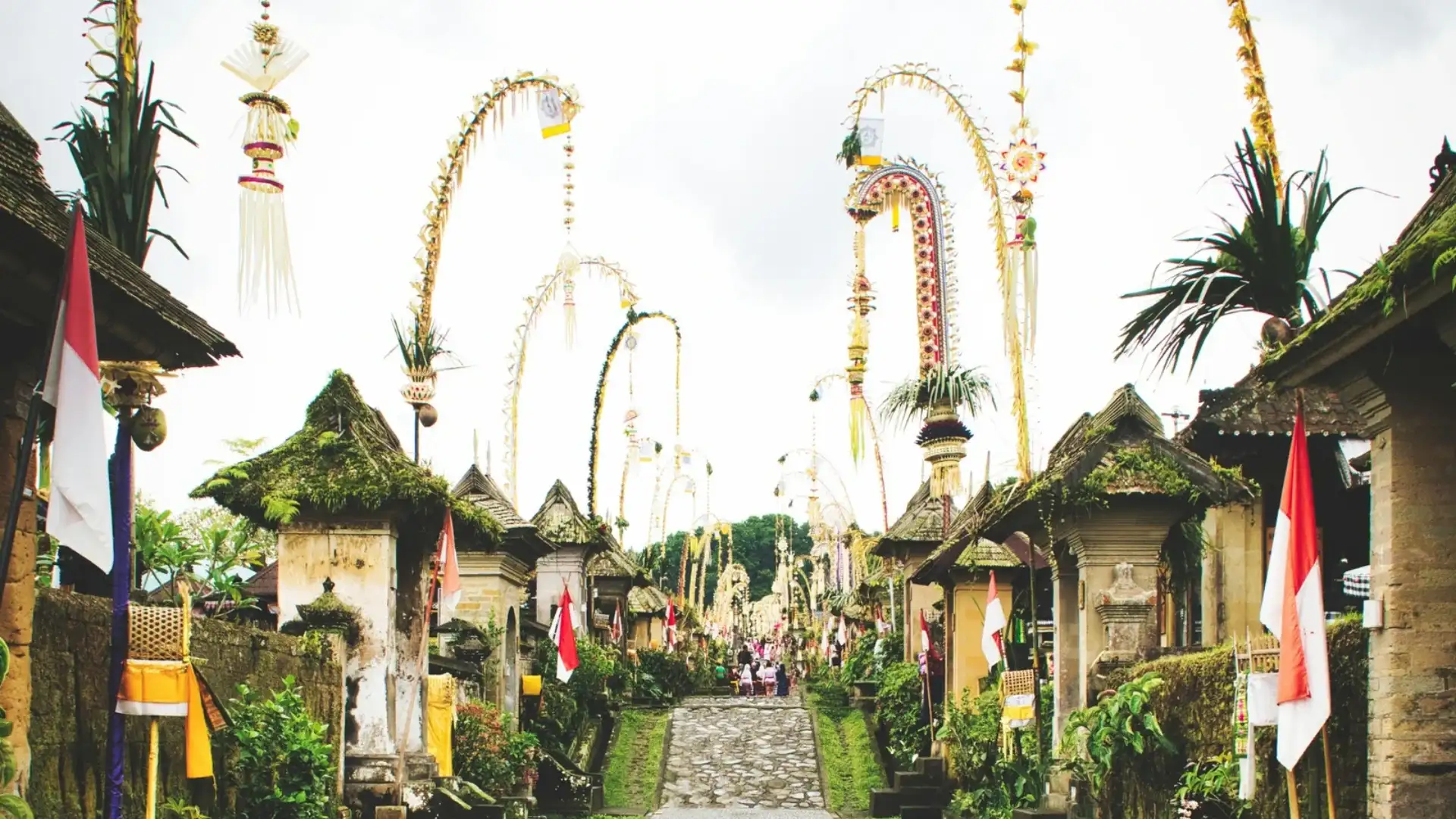
7 Beautiful Penjor Bali Traditions and Meanings
Why Are Bamboo Poles Decorated Along Bali’s Streets?
Visitors arriving in Bali around Galungan often discover roads transformed by graceful bamboo arches, woven palm leaves, and hanging harvest offerings. These remarkable structures are called penjor. Although beautiful to photograph, they are far more than seasonal decorations. Penjor Bali traditions express gratitude, spiritual devotion, and the relationship between people and nature. Understanding their meaning offers a richer introduction to Balinese Hindu culture and the communities that preserve it.
What Exactly Is a Penjor?
A penjor is a tall bamboo pole, naturally curved near its tip, decorated with young coconut leaves, agricultural produce, and ceremonial ornaments. Many include a small offering shrine near the base. Families commonly install them outside homes and compounds, creating distinctive avenues throughout villages. Penjor Bali displays are especially associated with Galungan, although similar structures may appear at temple anniversaries and other celebrations. Their precise appearance varies with local customs, available materials, and ceremonial purpose. Penjor Bali also creates a shared landscape, where neighboring households contribute individually to a collective atmosphere of celebration.
Why Does the Bamboo Curve?
The elegant arch is not merely an artistic flourish. Traditional interpretations connect the shape with sacred mountains, particularly Mount Agung, which holds profound religious importance in Bali. Some explanations also associate elements of the penjor with protective mythological serpents, including Naga Basuki. Penjor Bali symbolism should be understood as layered rather than reduced to one universal interpretation. Different communities and religious teachings may emphasize particular meanings, but reverence for the natural world remains central.
What Do the Decorations Represent?
A closer look reveals that many decorations come directly from the land. Rice, corn, coconuts, fruit, tubers, and sugarcane can represent nourishment, fertility, and prosperity. Intricately woven janur, or young coconut leaves, demonstrates craftsmanship and ceremonial care. White and yellow fabrics may carry additional sacred associations. Penjor Bali arrangements acknowledge the gifts that sustain human life, making gratitude visible through everyday agricultural materials. The components are not interchangeable party accessories; their significance deserves respect. Penjor Bali decorations remind observers that farming, food, craftsmanship, and faith are closely connected, even in a destination often associated primarily with beaches and resorts.
How Does Penjor Connect With Galungan?
Galungan celebrates the victory of dharma, or righteousness, over adharma, often understood as harmful or unrighteous forces. It occurs every 210 days according to the Balinese Pawukon calendar. Families prepare offerings, visit temples, and gather with relatives. Penjor Bali installations typically appear on Penampahan Galungan, the day before the celebration. Their presence marks both festive preparation and an invitation to reflect on goodness, self-discipline, and spiritual responsibility. For many families, making the penjor together is itself a meaningful part of the occasion.
What Happens During Kuningan?
Kuningan takes place ten days after Galungan and concludes an important phase of the celebration. Balinese Hindu traditions describe this period as a time of connection with ancestors, culminating in prayers and offerings as ancestral spirits return to their spiritual realm. Penjor Bali decorations often remain standing during Kuningan, so visitors can experience their beauty beyond Galungan itself. Kuningan is not simply another decorating day; it has its own prayers, symbolic offerings, and religious significance.
What Is the Meaning of Tri Hita Karana?
Penjor Bali can also illustrate Tri Hita Karana, a Balinese philosophy emphasizing harmonious relationships with the divine, other people, and the environment. The agricultural ornaments evoke dependence on nature; family preparation encourages cooperation; and the offerings express devotion. This interpretation helps explain why penjor cannot be understood solely through visual beauty. They reflect a worldview in which prosperity carries responsibilities toward community, spirituality, and the land that provides sustenance.
Are All Penjor Sacred?
Not every bamboo decoration serves the same purpose. Religious penjor, prepared for Galungan or temple ceremonies, have sacred functions and may include dedicated offering elements. Decorative penjor may also appear at cultural festivals, public events, or celebrations without the same ritual role. Penjor Bali visitors encounter should therefore be appreciated in context. When uncertain, ask a local host or community member rather than assuming a display is available for touching, rearranging, or posing with.
How Are Penjor Made?
Creating a penjor involves selecting bamboo, preparing woven leaves, assembling ornaments, and securing the structure safely. Skills are often shared among relatives and neighbors, and individual designs reflect local artistry. Penjor Bali craftsmanship reveals how tradition survives through participation, patience, and knowledge passed between generations. The process brings people together before the holiday even begins. Penjor Bali preparation can be an opportunity for younger family members to learn weaving techniques and understand why particular materials are selected.
How Can Visitors Show Respect?
During Galungan, visitors may encounter processions, temple prayers, busy family compounds, and altered traffic patterns. Enjoy the scenery without blocking entrances or disturbing offerings. Ask permission before photographing ceremonies or people, dress appropriately when entering temples, and follow guidance from local hosts. Penjor Bali is part of a living religious tradition, not an attraction staged exclusively for tourists. Respectful curiosity makes cultural encounters more rewarding for everyone. Penjor Bali appreciation begins with recognizing that each installation belongs to a household, community, or ceremonial setting with its own expectations.
Discover the Culture Behind Bali’s Traditions
What stories, values, and local customs might you discover when you look beyond Bali’s familiar scenery? Penjor Bali offers one beautiful example of how spirituality and community shape everyday life. Synergy Pro Corporate Business & Legal Advisory helps international clients understand the local context of living, investing, and operating businesses in Bali and Lombok. Contact our team to explore your next steps with informed local guidance.