


Second Home Visa (E33) Explained: Do's, Don'ts, and Requirements
Indonesia attracts foreigners seeking a longer stay in Bali, Lombok, and other destinations. Yet living in Indonesia, working there, and investing there are different legal activities. The Second Home Visa offers a long-term residence pathway for eligible foreigners who satisfy immigration conditions. Understanding the Second Home Visa before applying helps avoid expensive assumptions about bank deposits, property, employment, and family arrangements. This guide explains practical requirements, responsible choices, and common mistakes under the published 2026 framework.
Understand the Correct Visa Category
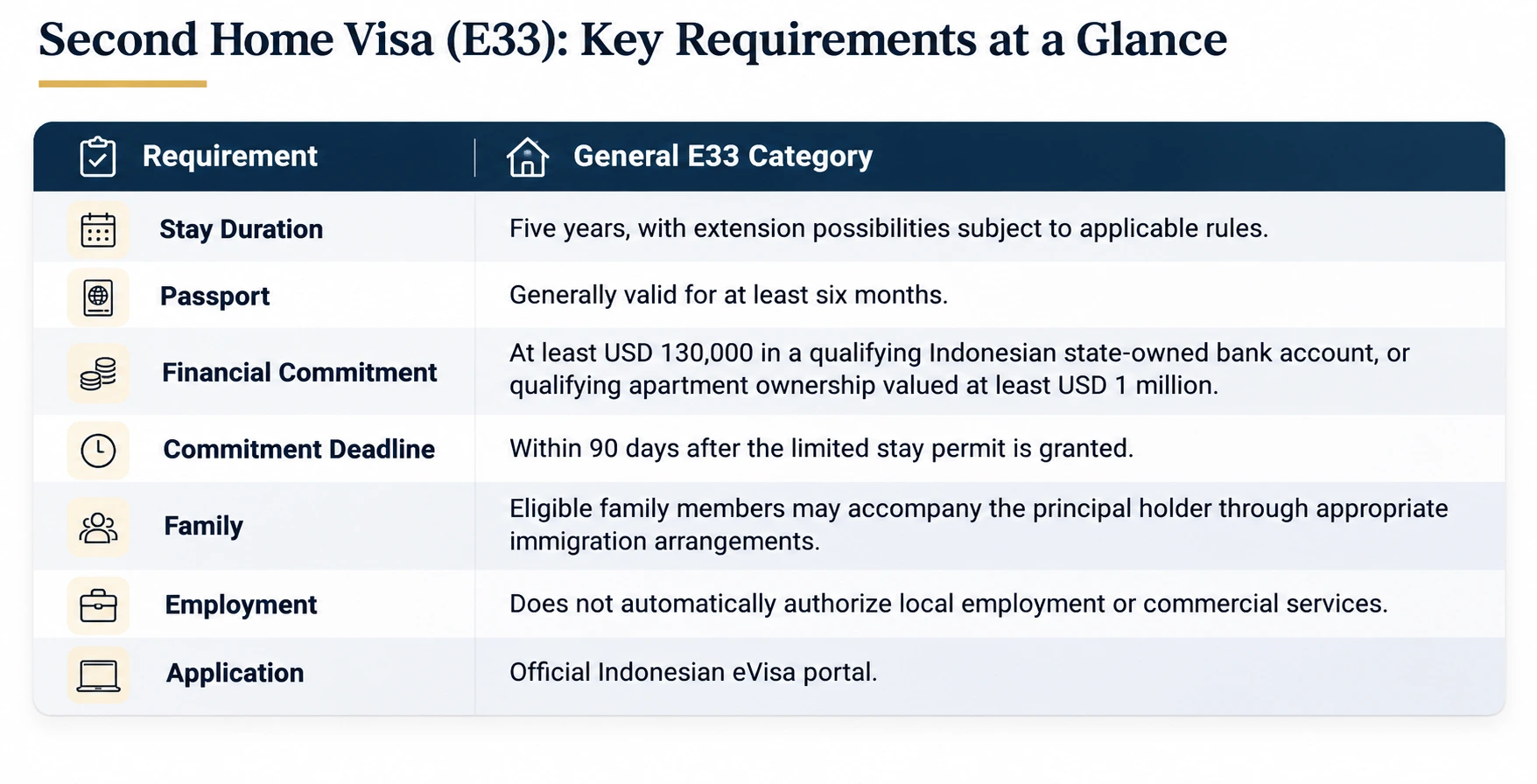
The general E33 Second Home Visa is intended for qualifying foreigners establishing a second residence in Indonesia. Immigration guidance describes a five-year stay, with extension possibilities subject to the applicable rules. The Second Home Visa is not interchangeable with the E33G remote-worker category, investor permits, or family-sponsored residence permits. Each category addresses different circumstances and activities. Applicants should choose according to what they will actually do, not simply how long they hope to stay.
Prepare Your Application Documents
Second Home Visa applicants generally need a valid national passport, recent photograph, evidence of sufficient living funds, and an immigration-guarantee commitment. Published guidance specifies a passport valid for at least six months, although additional requirements may apply to particular applicants. Apply through the official Indonesian eVisa portal and follow the document instructions displayed for the selected category. Keep copies of submitted records and approval notices. The Second Home Visa application should accurately reflect your identity, financial circumstances, and intended activities. Inconsistent documents can delay assessment or create problems after arrival.
Understand the Financial Commitment
A major Second Home Visa requirement concerns financial assurance. Official immigration guidance identifies two alternative commitments: maintain at least USD 130,000, or its equivalent, in an account under your name at an Indonesian state-owned bank; or purchase qualifying apartment or condominium property valued at least USD 1 million, or its equivalent. The commitment generally must be fulfilled within 90 days after the limited stay permit is granted. The Second Home Visa financial condition should not be confused with an application fee. Confirm acceptable evidence, reporting procedures, and the latest figures directly with Immigration before transferring substantial funds.
Do Verify Property Eligibility
Do not assume any villa purchase or land lease satisfies the property alternative. Published Second Home Visa guidance specifically refers to qualifying apartments or condominium units, not every type of residential investment. Foreign property rights are separately regulated, so a visa does not grant unrestricted ownership of Indonesian land. Before relying on property as financial evidence, verify its legal title, permitted ownership structure, valuation, and documentary requirements. For the Second Home Visa, property due diligence and immigration eligibility should be assessed together, ideally before paying a nonrefundable deposit.
Do Respect Permitted Activities
Holding a Second Home Visa allows qualifying residence and activities such as tourism and visiting relatives. Official E33 guidance prohibits selling goods or services and receiving wages or comparable remuneration from Indonesian individuals or companies under the ordinary category conditions. A residence permit is not automatically a work permit. If you plan to manage an Indonesian business, provide services, or work remotely, seek advice on the correct visa and any applicable activity-reporting mechanism. The Second Home Visa should never be used as a shortcut around employment, corporate, or immigration requirements.
Don’t Ignore Family Arrangements
Eligible spouses and children may be able to join a Second Home Visa holder, but each family member needs an appropriate immigration basis and supporting documents. Marriage certificates, birth certificates, and translations may be relevant depending on the circumstances. Do not assume a principal applicant’s approval automatically grants everyone permission to stay. Families should also plan for school enrollment, healthcare, and permit expiration dates. The Second Home Visa may support long-term family life, but dependent eligibility and administrative procedures require individual verification.
Don’t Overlook Postarrival Compliance
The Second Home Visa involves responsibilities after approval. Immigration guidance requires timely fulfillment of the financial commitment, and local offices publish proof-of-funds reporting procedures. Retain bank certificates, property documents, passport records, and immigration correspondence. Monitor your stay-permit validity and reentry permission before international travel. Report changes when required and avoid remaining in Indonesia beyond the authorized period. Second Home Visa holders must also respect Indonesian laws, local customs, and applicable residence obligations. Immigration compliance continues throughout the stay, not only during the initial application.
Compare Alternatives Before Deciding
Someone employed remotely by an overseas company may find the separate E33G category more appropriate; that category has its own income and employment criteria. Investors actively involved in Indonesian companies should examine relevant investor or work-based permits. Retirees and family members may qualify for other residence pathways. The Second Home Visa is valuable for some applicants, but it is not universally the simplest or most suitable option. Compare eligibility, permitted activities, documentation, financial commitments, and renewal arrangements before deciding.
Before submitting an application, prepare a personal checklist covering passport validity, funding sources, family documents, intended activities, and future travel. Ask which documents must be translated or legalized, and confirm deadlines in writing. These small checks can prevent avoidable complications during relocation and subsequent immigration reporting.
Plan Your Indonesian Residence With Confidence
How can you choose a residence pathway that supports your lifestyle without creating immigration or investment risks? The Second Home Visa requires careful attention to financial evidence, permitted activities, and ongoing obligations. Contact Synergy Pro Corporate Business & Legal Advisory for guidance on visa eligibility, application documentation, immigration compliance, and related property or corporate legal matters in Bali and Lombok.