
5 Essential Tumpek Landep Bali Cultural Insights
Bali is known for vibrant ceremonies that connect spiritual beliefs with everyday life. Among them, Tumpek Landep Bali offers foreign residents, tourists, and entrepreneurs an opportunity to understand how Balinese Hindus value knowledge, tools, and responsibility. Visitors may notice decorated motorcycles, cars, computers, and ceremonial objects receiving offerings. Yet the celebration involves much more than blessing vehicles. Understanding Tumpek Landep Bali helps newcomers appreciate its religious significance, respect local communities, and build stronger relationships while living or operating businesses on the island.
A Sacred Celebration of Wisdom
Tumpek Landep Bali is a Hindu holy day associated with worship of Ida Sang Hyang Widhi Wasa in the manifestation of Sang Hyang Siwa Pasupati. The word landep means sharp, referring both to sharp objects and, symbolically, a sharp or discerning mind. Traditional teachings emphasize clarity, intelligence, ethical judgment, and self reflection.
Rather than worshipping metal objects, participants express gratitude and seek blessings so their possessions serve beneficial purposes. Tumpek Landep Bali encourages people to sharpen their thinking, distinguish good choices from harmful ones, and use knowledge responsibly. This philosophical meaning is particularly relevant in a world increasingly dependent on technology.
For foreigners, the essential lesson is that visible offerings represent a deeper spiritual practice. Respect begins with recognizing the ceremony as an expression of faith, not merely an unusual roadside spectacle.
Why Vehicles and Equipment Receive Blessings
Historically, Tumpek Landep Bali ceremonies focused on traditional weapons and metal tools, including keris daggers, swords, knives, and agricultural implements. Such objects supported livelihoods, protection, and community activities. As technology evolved, the range of objects receiving blessings expanded.
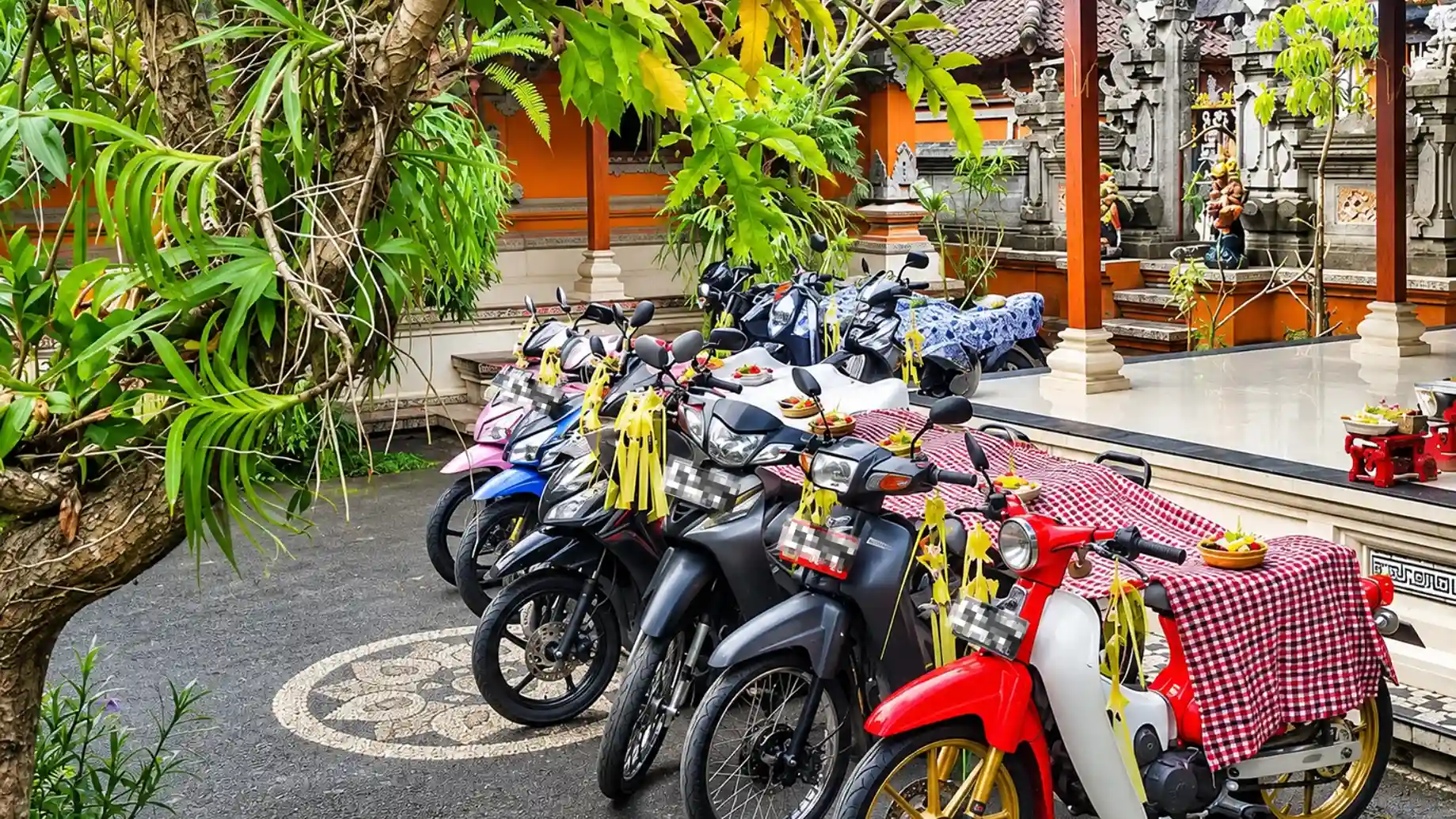
Today, families may prepare offerings for motorcycles, cars, computers, machinery, and other equipment used in daily life. During Tumpek Landep Bali, decorated vehicles may display woven palm ornaments, flowers, and ceremonial offerings. The specific arrangements vary according to family customs and local traditions.
These blessings symbolize appreciation for useful possessions and hopes that they will be operated wisely and safely. They do not replace routine maintenance, road safety rules, or workplace safety procedures. Foreign business owners can appreciate this symbolism without assuming every employee or household follows identical practices.
When and How the Celebration Takes Place
Tumpek Landep Bali follows the traditional Pawukon calendar, occurring every 210 days on Saniscara Kliwon of Wuku Landep. Consequently, its Gregorian calendar date changes from year to year. In 2026, the November observance fell on Saturday, 14 November.
Ceremonies may involve prayers at family shrines or temples, offerings known as banten, and blessings for treasured objects. One associated offering is Sesayut Pasupati, although details differ between communities. Religious leaders and families determine appropriate arrangements according to local practice.
Foreigners observing Tumpek Landep Bali might encounter temporary activity around homes, workshops, offices, or parking areas. Some employees may request time for prayers or family ceremonies. Businesses should communicate schedules respectfully rather than presume that every workplace must close.
Because Tumpek Landep Bali is a religious observance, visitors should avoid interrupting prayers or moving offerings simply to obtain photographs. Asking permission is always preferable to assuming participation or access is welcome.
Respectful Participation for Foreign Visitors
Understanding Tumpek Landep Bali requires cultural sensitivity. Visitors who are invited to observe should follow their hosts’ guidance, dress appropriately for the setting, and remain mindful of sacred spaces. Temple requirements can differ, so confirm expectations before entering.
Photographing decorated vehicles in public may appear harmless, but close photographs of worshippers, offerings, or private ceremonies deserve permission. Avoid stepping over offerings or touching religious objects. Speak quietly during prayers and allow ceremonies to proceed without interruption.
There is no expectation that non Hindu visitors must perform Hindu rituals. Respectful observation and genuine curiosity are sufficient. When discussing Tumpek Landep Bali online, explain its spiritual meaning accurately rather than reducing it to a celebration of cars or motorcycles.
Foreign residents can also ask local colleagues about the significance of the day. Listening without making assumptions about Tumpek Landep Bali helps establish trust and demonstrates genuine appreciation for the community’s traditions.
Why the Tradition Matters for Businesses
For companies operating in Bali, Tumpek Landep Bali offers a reminder that cultural awareness is part of responsible business management. Employees may observe ceremonies involving office equipment, vehicles, or tools, depending on their beliefs and workplace arrangements.
Managers can discuss reasonable scheduling, respect employees’ religious practices, and coordinate any ceremonies with relevant safety requirements. Participation should be approached respectfully, without pressuring employees who follow different beliefs. Cultural accommodation also needs to remain consistent with applicable employment obligations and operational needs.
Bali Provincial Regulation Number 4 of 2020 addresses the strengthening and advancement of Balinese culture. Separately, Governor’s Instruction Number 7 of 2025 informed official Tumpek observances in 2026. Neither reference should be interpreted as automatically requiring every private company to conduct a particular Tumpek Landep Bali ceremony.
Foreign investors should distinguish cultural respect from formal legal compliance. Understanding local traditions complements, but does not replace, business licensing, employment documentation, immigration authorization, and other regulatory responsibilities.
Build Your Business With Cultural Understanding
How can your business thrive in Bali while respecting local traditions and meeting Indonesian legal requirements?
Synergy Pro Corporate Business & Legal Advisory supports foreign investors and entrepreneurs with company establishment, HR management, licensing, and regulatory compliance. Contact our team to build a business foundation that respects Bali’s cultural environment and supports responsible sustainable long term growth.